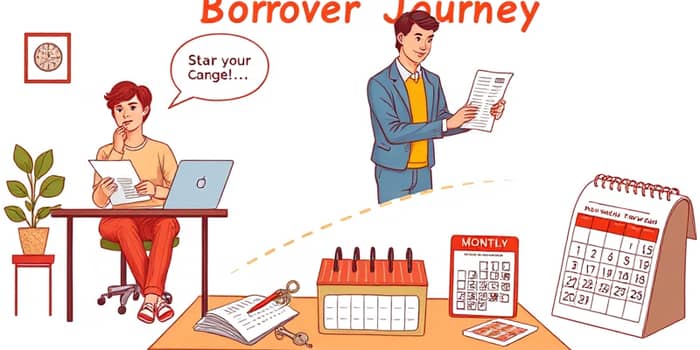
Embarking on a loan experience can feel overwhelming, but with clear steps and smart planning, you’ll navigate each phase with confidence. Whether you’re pursuing a mortgage, personal loan, or business financing, understanding the process from start to finish will empower you to make informed decisions, avoid delays, and ultimately manage your repayment successfully.
Pre-Application Preparation
Before submitting any forms, take time to assess your financial health. Begin by checking your credit score, reviewing outstanding debts, and estimating how much you truly need to borrow. This foundational work ensures you approach lenders from a position of strength.
Gathering and organizing required documents early can dramatically speed up approval. Create clear folders—digital or physical—for each item to avoid scrambling later.
- Proof of income: recent pay stubs, W-2s, or 2–3 years of tax returns
- Asset statements: bank accounts, investment holdings, savings balances
- Employment verification: letter from employer or business financial statements
- Identification: driver’s license, Social Security number, proof of address
- Debt details: credit card statements, outstanding loans, lease agreements
With these documents ready, you can approach lenders for pre-qualification or pre-approval. A pre-qualification offers a quick estimate of your purchasing power without impacting your credit score, while a pre-approval involves a formal review and credit pull, strengthening your negotiating position.
- Compare pre-qualification offers from multiple lenders to find competitive rates
- Calculate your borrowing needs realistically to avoid stretching your budget
- Address any credit issues—like high balances or late payments—before applying
- Research loan types (mortgage, auto, personal, business) to choose the best fit
Application Submission Phase
Once pre-approval is in hand, it’s time to submit a formal application. You’ll specify loan amount, term, purpose, and, for secured loans, the collateral property address. Locking in an interest rate at this stage can protect you against market swings.
Accurate, complete submissions are key to avoiding delays. Lenders will issue a Loan Estimate within days, detailing estimated monthly payments, closing costs, and required down payment.
Processing and Underwriting
After application, the lender’s processing team verifies every piece of information: bank statements, tax filings, employment status, and legal documentation. They’ll also order third-party services such as property appraisals, title searches, and insurance quotes for mortgages.
In underwriting, your profile is assessed against the Five C’s of Credit:
- Character: credit history and repayment patterns
- Capacity: income stability and debt-to-income ratio
- Capital: down payment and cash reserves
- Collateral: property or assets securing the loan
- Conditions: overall economic climate and industry trends
Expect a hard credit check and potentially several conditions to satisfy, such as updated insurance declarations or proof of additional funds. Keeping in close communication and providing extra documents promptly will help you reach a conditional approval swiftly.
Approval, Closing, and Funding
Once underwriters issue a clear to close, you’ll receive final instructions. Review closing disclosures carefully—verify interest rate, loan terms, closing costs, and any prepayment penalties.
On closing day, you’ll visit a title company or attorney’s office to sign legal documents, wire closing funds, and pay any required fees. After signatures are complete, the lender disburses funds, titles transfer, and you receive keys or notice of loan activation.
At this stage, set up your repayment method. Many borrowers choose automatic withdrawals to ensure timely monthly payments and reduce the risk of penalties.
Managing Repayment Successfully
Repayment begins according to the schedule in your loan agreement. Monthly statements outline principal, interest, and any applicable fees. Staying on top of these details prevents surprises and builds equity in secured loans over time.
- Enroll in autopay to make on-time payments each month
- Use the lender’s online portal to track balances and payment history
- Review each statement for accuracy and report discrepancies immediately
- Consider extra principal payments if you have financial flexibility
For specialized programs, such as student loan forgiveness or agricultural financing, you may need to submit periodic statements—no older than 30 days—detailing original disbursement dates, amounts, interest rates, and current balances on official letterhead.
Key Timelines and Metrics
Understanding average durations helps set realistic expectations. While each loan type varies, the following table highlights typical benchmarks:
Final Thoughts and Tips
Your borrowing journey need not be stressful. By staying organized, communicating openly with your lender, and understanding each phase, you’ll move from application to repayment with clarity and control. Remember to:
- Review all disclosures and ask questions before signing
- Maintain a strong credit profile by avoiding late payments
- Plan for unexpected expenses to prevent payment disruptions
- Stay informed about your rights and responsibilities as a borrower
With these strategies in hand, you’ll not only secure the financing you need but also build a roadmap for long-term financial success and peace of mind.
References
- https://www.cohenmortgage.com/blog/236658/purchasing-a-home/the-loan-application-process-step-by-step-guidance
- https://farmcreditcfl.com/resources/article/5-basic-steps-loan-approval-process
- https://www.experian.com/blogs/ask-experian/personal-loans-what-to-know-before-you-apply/
- https://www.firstmerchants.com/resources/learn/blogs/blog-detail/resource-library/2024/01/03/the-mortgage-loan-process-a-step-by-step-guide
- https://www.rate.com/mortgage/resource/mortgage-loan-processing
- https://www.northtexascpas.net/important-stages-for-loan-process/
- https://www.bankofamerica.com/mortgage/learn/guide-to-the-mortgage-loan-process/
- https://www.firstcapitalfcu.com/education/financial-education/blog-detail.html?title=navigating-the-loan-application-process-how-to-secure-financing
- https://www.navyfederal.org/loans-cards/mortgage/mortgage-basics/mortgage-process.html
- https://pursuitlending.com/resources/loan-process/
- https://resources.liveoak.bank/blog/what-happens-during-the-loan-application-process
- https://www.finance.ucla.edu/treasury/submit-a-loan-application
- https://www.blooma.ai/blog/the-4-stages-of-the-loan-origination-process
- https://www.youtube.com/watch?v=uskuLuvxm8c