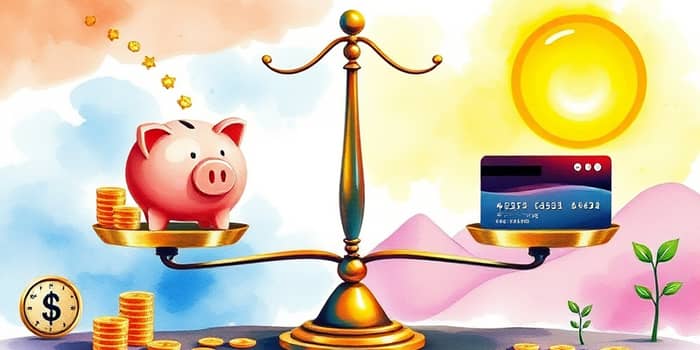
Deciding whether to allocate extra funds toward savings or accelerate debt repayment can feel like walking a financial tightrope. Yet, understanding the underlying principles can transform uncertainty into a clear, actionable plan. This guide combines expert research and practical insights to help you find the balance between savings and debt in any economic climate.
Understanding the Financial Trade-Off
The trade-off between borrowing and saving rests on a few core elements: interest rates, risk tolerance, time horizon, and personal psychology. According to Bankrate’s 2024 Emergency Savings Report, 36% of U.S. adults juggle both debt repayment and emergency savings simultaneously, while 59% remain uncomfortable with their current safety net. At the same time, 44% of credit card holders carry balances month to month.
These statistics highlight a critical truth: few people strictly choose one path. Instead, they prioritize based on shifting circumstances and goals, making strategic decisions to optimize long-term well-being.
Core Decision Drivers
To navigate this crossroads, consider six key factors that inform whether you should borrow more, save more, or strike a middle ground.
- Interest rate comparison: Compare the after-tax cost of debt against the expected returns on savings or investments.
- Emergency buffer and risk: A robust safety net prevents you from cycling back into high-cost borrowing.
- Type and purpose of debt: Understand which liabilities are productive versus purely consumptive.
- Time horizon of goals: Short-term needs often demand cash reserves, while long-term ambitions thrive on compound growth.
- Cash flow and stability: Consistent income supports planned borrowing, whereas volatile earnings favor liquidity.
- Psychological and behavioral factors: Align your strategy with what motivates and reassures you most.
When Saving Comes First
Saving should take precedence in scenarios where risk without protection could derail progress. Building liquidity early on lays the foundation for sustainable financial health.
- Little or no emergency fund
- Low-interest borrowing environment
- Employer retirement match available
- Near-term planned expenses
1. No Emergency Fund in Place
Without at least a small cushion, unexpected expenses—from car repairs to medical bills—can force you back into high-interest debt. Many experts recommend starting with a high-yield savings account and targeting one month of expenses as an initial goal, before gradually building toward 3 6 months of living expenses. Some even advise up to a year’s worth of costs for those with variable incomes.
2. Very Low-Rate Debt
When your outstanding balances carry minimal interest—think 0% APR promotions or subsidized federal student loans—it may be advantageous to focus on savings or retirement contributions first. In particular, capturing an employer retirement match contributions is tantamount to an immediate 100% return, dwarfing many loan costs.
3. Near-Term Expenses on the Horizon
Planned large purchases like a home down payment, major appliance replacement, or tuition can often be funded more cheaply by saving in advance than by taking on new loans. Establishing separate sinking funds for these goals can help you avoid financing non-essential items with credit.
When Paying Down Debt Comes First
In other cases, channeling extra funds toward debt can yield larger benefits than letting cash sit idle. Reducing liabilities not only cuts interest costs but also frees up future cash flow and lowers financial stress.
1. High-Interest Consumer Debt
Credit cards, payday loans, and other unsecured borrowing often carry APRs of 15–30% or more, far outpacing any realistic investment return. Once a basic emergency fund is established, it is best practice to pay off these balances as aggressively as possible to minimize total interest paid.
2. Adequate Emergency Savings Already Built
If you’ve secured a comfortable buffer—typically 3–6 months of expenses—you might shift focus to debt reduction, especially if your interest rates have crossed into double digits. Prioritizing principal paydown accelerates your progress toward a debt-free future.
3. Credit Utilization and Monthly Cash Flow
High monthly payments and elevated credit card utilization can hamper your ability to borrow strategically in the future. Keeping your credit utilization ratio below thirty percent supports stronger credit scores and access to lower interest rates for mortgages or auto loans.
Strategic Borrowing Opportunities
Not all borrowing is detrimental. When deployed thoughtfully, debt can fund investments in your future—education, real estate, or entrepreneurship—so long as the terms are favorable and the expected returns justify the cost.
- Education loans that boost earning potential
- Mortgage debt on fixed, low rates
- Business financing for high-ROI projects
Putting It All Together
Every individual’s situation is unique, blending different debts, income stability, and personal goals. To craft your personalized plan:
1. Audit your finances: list all debts with their interest rates alongside current savings balances. 2. Prioritize an emergency fund if you lack liquidity. 3. Aggressively tackle high-interest debts. 4. Seize free returns via employer retirement matches. 5. Allocate any remaining funds according to your risk tolerance and time horizon.
Regularly revisit your plan as interest rates shift, income fluctuates, and life circumstances evolve. By maintaining a clear framework and staying disciplined, you can confidently decide when to borrow and when to save, ensuring your money works as hard as you do.
Ultimately, financial resilience emerges from balancing protection with progress. Armed with these strategies, you can face unexpected challenges, seize growth opportunities, and build a secure future—one deliberate decision at a time.
References
- https://broadway.bank/newsroom/stories/when-to-focus-on-debt-vs-savings
- https://www.familycu.com/spending-vs-saving/
- https://www.bannerbank.com/financial-resources/blog/navigating-high-interest-rates
- https://www.bankrate.com/banking/savings/these-guidelines-will-help-you-decide-whether-to-pay-down-debt-or-save/
- https://esusurent.com/blog/earning-saving-borrowing-and-spending-a-guide-for-financial-literacy-month
- https://www.fidelity.com/viewpoints/personal-finance/how-to-pay-off-debt
- https://bettermoneyhabits.bankofamerica.com/en/saving-budgeting/pay-down-debt-save-or-invest
- https://www.dol.gov/agencies/ebsa/about-ebsa/our-activities/resource-center/publications/savings-fitness
- https://www.consumerfinance.gov/an-essential-guide-to-building-an-emergency-fund/
- https://srfs.upenn.edu/financial-wellness/browse-topics/budgeting/popular-budgeting-strategies