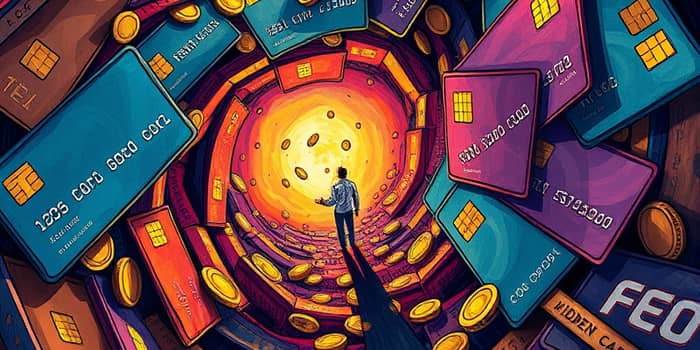
In a world where credit cards and personal loans promise flexibility, the true price of borrowing often remains concealed. Millions sign up expecting only the advertised interest rate, only to face an intricate web of fees that erode their budgets. This article explores how each swipe, withdrawal, and balance transfer may carry unforeseen financial burdens that undermine your long-term goals.
Credit can be a powerful ally when used responsibly, but diving in without understanding all related costs is like walking a tightrope blindfolded. By the end of this guide, you will be ready to spot hidden charges and protect your hard-earned money against costly surprises waiting to emerge.
Looking Beyond the Advertised APR
Lenders highlight the Annual Percentage Rate (APR) to help you compare offers. Yet APR reveals only a baseline. It ignores penalty rate hikes, one-time fees, and compounding structures that can inflate your balance over time.
When you miss a payment, your rate can jump to a punitive penalty APR north of 29%. For instance, a card with a 19.99% regular rate can surge to 24.99% after just two late statements. That leap can turn an otherwise manageable debt into a relentless drag on your finances.
Fixed rates remain constant, offering predictability; variable rates, however, can spike unexpectedly when market indices rise. Finance charges roll interest and fees into a single total, often leaving borrowers puzzled by the true drivers behind escalating balances.
Navigating a Maze of Additional Fees
Beyond interest, credit agreements may include over a dozen fee categories, each designed to capture extra revenue. Some charges apply routinely, while others activate under specific conditions, all feeding the total cost of credit.
Additional charges such as over-limit fees (~$39), origination fees, and returned payment penalties up to $48 further inflate costs. Dynamic currency conversion and hidden foreign exchange markups often catch travelers off guard. All of these are detailed in the Schumer box and buried in fine print most consumers never read.
The Minimum Payment Trap
Perhaps the most deceptive feature is the minimum payment requirement. That small monthly figure feels manageable, but paying only the minimum can stretch your debt over decades. Meanwhile, interest gobbles most of your payment, leaving principal balances almost untouched.
For example, a $4,000 balance at 22% APR with a $100 minimum payment could take over 20 years to clear, generating nearly $8,000 in interest bills—double the original amount borrowed. This illusion of manageable debt ensnares borrowers in long-term repayment cycles that benefit lenders far more than consumers.
Opting to pay above the minimum even slightly can dramatically shorten your timeline. On a $1,000 balance at 12.99%, a $30/month minimum vs. $50/month saves over $114 in interest and cuts repayment time from 42 to 23 months.
Grace Periods and Introductory Offers
Grace periods allow you to avoid interest on purchases if you clear your balance in full each month. However, they don’t apply to cash advances or balance transfers, which start accruing interest immediately. Understanding the fine print here prevents unwelcome surprises.
Many cards tout 0% introductory APRs to lure customers. While these deals can offer temporary relief, they end abruptly—often reverting to high standard rates. If you don’t clear your debt before the promotional window closes, you may face steep charges you cannot afford.
- Verify grace period terms since they differ by issuer and transaction type.
- Mark introductory end dates on your calendar to avoid automatic rate hikes.
- Calculate break-even points to decide if transfer fees justify interest savings.
Practical Strategies to Avoid Hidden Costs
- Pay significantly above minimums to reduce principal faster and shrink total interest.
- Select no-annual-fee cards whenever possible to eliminate recurring maintenance charges.
- Automate on-time payments to avoid late fees and penalty APR increases.
- Avoid cash advances completely due to immediate interest accrual and steep fees.
- Review the Schumer box thoroughly to understand every potential fee before signing.
- Compare foreign transaction policies before travels to minimize hidden currency costs.
Beyond these tactics, maintain an emergency fund so you rarely rely on expensive credit. Consolidate high-rate balances only when fees justify the move, and constantly monitor your statements with a critical eye.
Understanding Different Credit Products
Each debt type carries its own cost profile. Personal loans may boast modest APRs but charge upfront origination fees. Auto financing offers predictable payments but may include early repayment penalties. Credit cards provide flexibility but hide numerous periodic and event-based fees.
By analyzing each product’s fee structure, interest terms, and promotional conditions, you can craft a repayment strategy that minimizes overall cost. Treat every debt separately—lumping all liabilities together often obscures the most expensive obligations.
Empowering Your Financial Future
Hidden credit costs may feel overwhelming, but knowledge is your most powerful defense. Knowing how lenders structure interest and fees strips away their ability to surprise you with extra charges.
Begin by auditing past statements: highlight every fee, total the interest paid, and set targeted goals to eliminate those charges over the next year. Contact customer service to negotiate or request fee waivers—many issuers will accommodate responsible cardholders.
With vigilance, education, and proactive management, you can transform credit from a hidden-cost trap into a strategic tool that boosts your financial resilience. Stay informed, demand transparency, and seize control of your financial destiny.
References
- https://www.accrediteddebtrelief.com/blog/the-debt-detective-uncovering-hidden-costs-in-credit-card-bills/
- https://payhawk.com/en-us/blog/what-are-common-hidden-credit-card-fees
- https://www.dnbcgroup.com/blog/hidden-fees-in-credit-cards-what-you-need-to-know-before-making-global-transfers/
- https://merchantcostconsulting.com/lower-credit-card-processing-fees/top-11-hidden-fees-in-payment-processing/
- https://davidsklar.com/blog/the-hidden-fees-of-credit-cards-and-how-to-avoid-them/
- https://www.bankrate.com/credit-cards/advice/avoid-common-credit-card-fees-2/
- https://mercury.com/blog/hidden-costs-business-credit-cards