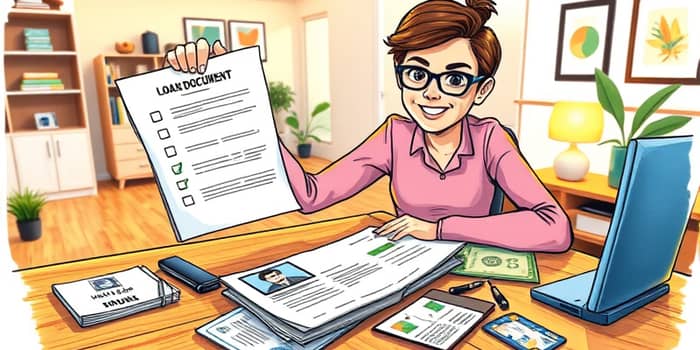
Embarking on the journey to secure a loan can feel daunting, but with meticulous preparation, it transforms into a empowering step toward your financial dreams.
Having an essential loan document checklist is your roadmap to a seamless and stress-free application process.
This guide will inspire you to take control, ensuring you are fully prepared and confident when approaching lenders.
By organizing your paperwork in advance, you can avoid unnecessary delays and stress, making your aspirations a reality.
Why a Detailed Checklist is Crucial
A well-prepared document set showcases your reliability and financial responsibility to lenders.
It streamlines the approval process, significantly reducing the risk of last-minute hiccups.
Lenders use these documents to verify your identity, income, assets, and liabilities, ensuring you meet criteria for loan eligibility and stability.
This proactive approach not only speeds things up but also builds your confidence in navigating complex financial steps.
Personal Identification Documents
Start by gathering all necessary identification to prove who you are.
This is the foundation of your application and is non-negotiable for any loan process.
It demonstrates your legitimacy and helps lenders assess risk accurately.
- Government-issued photo ID, such as a driver's license or passport.
- Social Security card or number verification.
- Full legal name, date of birth, current address, and contact information.
- For non-residents, a Certificate of Resident Alien Status, like a green card.
- A signed credit report authorization form.
Income Verification Documents
Your income is a critical factor in determining your borrowing capacity and financial health.
Lenders need to see consistent and verifiable earnings to trust your repayment ability.
Providing complete documentation here can make or break your approval chances.
- Pay stubs from the most recent 30 days, showing year-to-date gross income.
- W-2 forms from the past two years for all employment.
- Complete tax returns from the past two years, signed with all pages.
- Additional proof for commission, bonus, overtime, disability, child support, pension, alimony, and investments.
- Employment history verification for the past two years, including contact information.
Asset Documentation
Assets show your financial health and ability to cover down payments and closing costs.
They provide a cushion for lenders, indicating lower risk and greater security.
Transparency in this area can enhance your loan terms and approval odds.
- Bank statements from the last two months for all checking and savings accounts.
- Investment and retirement account statements from the last two to three months.
- Proof of other assets like vehicles or property.
- Gift letters and source of funds verification for any gift money.
- Canceled deposit for earnest money and corresponding bank statement.
- Purchase agreement if selling property to fund the loan.
Debt and Liabilities
Understanding your existing debts helps lenders assess your debt-to-income ratio, a vital metric.
This is crucial for determining how much you can afford to borrow responsibly.
Full disclosure here builds trust and avoids surprises during underwriting.
- A list of current debts including credit cards, auto loans, and student loans.
- Mortgage statements if you currently own a home.
- Landlord contact information for rental verification over the past 12 months.
- Homeowners insurance policy details and agent contact.
Property and Purchase Information
If you're buying a property, specific documents ensure the property is suitable and the transaction is legitimate.
This step safeguards your investment and aligns with lender requirements.
It adds a layer of security to the entire financing process.
- Signed purchase agreement or contract, fully executed.
- Appraisal report for the property.
- Property address, current owner name, and agent contacts.
- Title insurance information.
- Homeowners insurance policy or tax bill if you already own property.
Loan and Closing Documents
These are the formal agreements and disclosures that finalize the loan and protect all parties.
Understanding them empowers you to make informed financial decisions.
The Promissory Note details the loan amount, repayment terms, interest rate, and other critical financial commitments.
The Security Instrument, such as a Deed of Trust, secures the loan against the property, ensuring legal clarity.
Always review the Closing Disclosure at least three days before closing to avoid last-minute issues.
Special Circumstances and Additional Documents
Depending on your situation, extra forms may be required to address unique financial profiles.
This includes scenarios like self-employment, FHA or VA loans, bankruptcy history, or divorce.
Tailoring your documentation here demonstrates adaptability and thoroughness.
- For self-employed individuals: Personal and business tax returns from the last two to three years, Profit and Loss Statements.
- For FHA loans: HUD-92900-A Addendum, minimum required investment documentation.
- For VA loans: Certificate of Eligibility, DD-214 discharge papers.
- Bankruptcy documents from the past seven years, including petition and discharge.
- Divorce decrees or legal separation papers.
- Social Security or Disability award letters, current leases for rental properties.
Key Timelines and Best Practices
To keep your application on track, be aware of important timeframes that lenders prioritize.
Always include all pages of documents, even if blank, to maintain transparency and avoid questions.
Explain any anomalies, such as large deposits not from your paycheck, to build lender trust.
Tailor your documentation to your specific situation, whether you are self-employed, a first-time buyer, or using special loan programs.
By following this checklist, you can demonstrate financial responsibility and readiness, paving the way for approval.
This proactive approach not only accelerates the process but also fosters a sense of accomplishment as you move forward.
Remember, being prepared is half the battle won in securing your loan and achieving your goals.
With this essential guide, you are equipped to tackle the paperwork with ease and focus on a brighter, more secure financial future.
References
- https://www.superdocu.com/en/blog/mortgage-document-checklist/
- https://www.agsouthfc.com/news/blog/your-step-step-home-loan-checklist-smooth-approval
- https://www.manifest.ly/use-cases/realtors/loan-document-coordination-checklist
- https://fortralaw.com/the-essential-loan-documents-checklist-for-lenders/
- https://www.countrylivingloans.com/Resources/loan-application-checklist
- https://www.waterstonemortgage.com/blog/mortgage-basics/2020/03/home-loan-documents
- https://www.amerisbank.com/Personal/Mortgage/Tools-Resources/Borrower-s-Checklist
- https://www.emortgagecapital.com/post/essential-mortgage-loan-documents-checklist-a-comprehensive-guide
- https://www.amerisave.com/learn/complete-mortgage-preapproval-checklist-for-essential-documents-you-need
- https://www.movementbank.com/checklist/