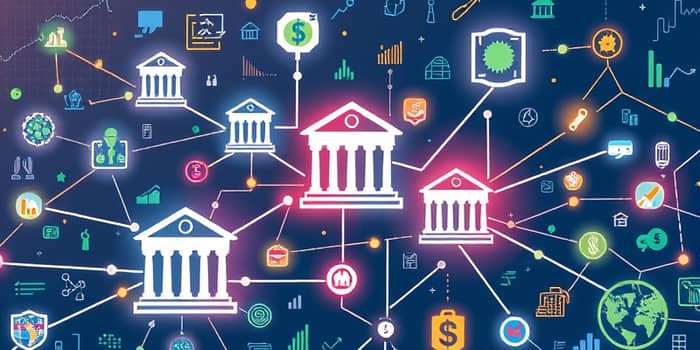
In today’s rapidly transforming financial landscape, the credit ecosystem stands at the forefront of opportunity and complexity. It shapes how individuals secure loans, how businesses fuel growth, and how economies chart their course through cycles of expansion and contraction.
Understanding this intricate web of institutions, processes, technologies, regulations, and participants is essential for anyone seeking to navigate credit markets effectively, whether as a borrower, investor, policymaker, or advocate for inclusion.
Defining the Credit Ecosystem
At its core, the credit ecosystem is an interconnected network of institutions, processes, technologies that together enable the origination, distribution, monitoring, and management of credit. It spans multiple layers—from traditional banks underwriting mortgages to innovative fintech platforms leveraging alternative data for instant approvals.
- Financial institutions: Banks, credit unions, insurers, and investment firms
- Nonbank financial entities (NBFIs): Private credit funds and asset managers
- Fintech companies: Digital lenders, data analytics providers
- Credit bureaus and registries: Public and private credit reporting services
- Consumers and businesses: Borrowers, investors, small and large enterprises
- Regulators: Central banks, financial authorities, international bodies
Core Components and Their Roles
Each actor within the credit ecosystem plays a specialized role, ensuring that capital flows efficiently from savers to borrowers while risks are assessed and managed.
Financial institutions serve as the backbone providers of credit, intermediating funds, underwriting risk, and offering a broad spectrum of loan products. For example, U.S. banks’ private credit exposure alone nears $300 billion, highlighting their central position in corporate lending.
Nonbank financial entities (NBFIs) have surged in importance, particularly in private credit markets. Structured as closed-end funds with multi-year lifecycles, they cater to corporations underserved by traditional banks, albeit with lighter regulation and potential vulnerability to liquidity squeezes.
Fintech firms drive innovation by harnessing alternative data and advanced analytics. Through partnerships with banks or direct lending, they expedite approvals, personalize terms, and improve inclusion for thin-file borrowers.
Credit bureaus and registries compile, process, and disseminate borrower information. The shift toward broader data sources—such as utility payments or rental histories—has strengthened financial inclusion while presenting new privacy and governance challenges.
Regulatory bodies, including central banks, financial conduct authorities, and global standard-setters, safeguard the ecosystem’s integrity. They enforce capital requirements, oversee conduct, and adapt rules to mitigate emerging threats.
Types of Credit Services and Products
The diversity of credit offerings caters to varied needs, risk profiles, and maturities. Understanding these categories helps stakeholders identify the best fit for their objectives.
- Consumer credit: Credit cards, personal loans, mortgages from banks and fintechs
- Corporate credit: Direct lending for SMEs and large enterprises, syndicated loans
- Alternative/private credit: Unsecured business loans, tailored covenant structures
- Credit reporting and scoring: Traditional FICO scores plus evolving models with wider data
- Specialized ecosystem credits: Carbon and biodiversity credits, traded for environmental impact
Partnerships, Competition, and Technological Trends
The credit landscape is witnessing a shift from bank-centric models to a coopetition of banks, asset managers, insurers, and fintechs. Strategic alliances allow each party to leverage its strengths—banks’ distribution channels, fintechs’ technology, and NBFIs’ capital flexibility.
An “open-architecture” approach is gaining traction, wherein originators, distributors, and servicers operate across separate value-chain stages. This modular model fosters innovation, but demands robust risk-sharing agreements and clear governance structures.
Technology integration—through AI-driven risk scoring, blockchain-based ledgers, and cloud-native platforms—is no longer optional. It underpins scalability, enhances transparency, and enables real-time monitoring to meet rapidly evolving consumer expectations and regulatory requirements.
Regulatory Landscape and Risk Management
Global bodies such as the Financial Action Task Force (FATF), Consumer Financial Protection Bureau (CFPB), European Central Bank (ECB), and national regulators continually refine frameworks to address systemic risks. They emphasize:
• Anti–money laundering and counter-terrorist financing controls
• Consumer protection through transparent disclosure and fair lending practices
• Capital and liquidity standards for banks and NBFIs to absorb shocks
Effective risk management relies on enhanced risk management and data transparency. Entities deploy advanced analytics to stress-test portfolios, detect early warning signals, and model tail events.
Quantitative Perspectives on Credit Markets
A glance at key metrics reveals the scale and diversity of credit markets across traditional and emerging segments. Below is a snapshot of vital figures shaping strategic decisions.
Challenges and Opportunities Ahead
Regulatory uncertainty and the pace of technological change pose significant hurdles. Navigating regulatory uncertainty requires proactive engagement and robust compliance strategies that anticipate policy shifts and embed flexibility.
Meanwhile, the rise of private credit offers compelling growth prospects. Institutions that successfully meld scale with digital sophistication can capture deals across sectors—from infrastructure to renewable energy—while delivering attractive yields.
Financial Inclusion and Environmental Integration
Approximately 10% of SMEs in advanced economies and over 20% in emerging markets face credit constraints due to limited collateral or thin credit histories. Direct lending platforms and alternative scoring models are closing this gap, empowering entrepreneurs worldwide.
Integration of ecosystem credits—such as carbon offsets and biodiversity units—into mainstream finance is another frontier. By assigning transparent monetary value to environmental assets, the credit ecosystem can incentivize sustainability and channel capital toward green projects.
Conclusion: Navigating the Evolving Credit Ecosystem
The credit ecosystem’s dynamism offers both promise and peril. As traditional banks, fintech innovators, NBFIs, and regulators forge new alliances, stakeholders must remain vigilant, adaptive, and aligned with emerging best practices.
By embracing innovative partnerships and sustainable practices, investors can uncover untapped opportunities, borrowers can access fairer financing, and societies can advance toward more inclusive, resilient growth. Practical steps include monitoring credit scores regularly, exploring digital lending channels, engaging with local policymakers, and prioritizing ESG integration in portfolio decisions. In doing so, participants will not only survive but thrive in the next chapter of credit evolution.
References
- https://payally.co.uk/glossary/financial-ecosystem/
- https://www.bis.org/publ/qtrpdf/r_qt2503b.htm
- https://thinkupsoft.com/blog/who-are-the-key-players-in-the-digital-banking-ecosystem/
- https://www.mckinsey.com/industries/private-capital/our-insights/the-next-era-of-private-credit
- https://www.pli.edu/programs/consumer-financial-services-fundamentals/433357
- https://stripe.com/resources/more/the-payment-industry-ecosystem-explained
- https://mo-technologies-cc.readme.io/docs/credit-ecosystem
- https://tellerwindow.newyorkfed.org/2025/10/17/nbfis-in-focus-the-basics-of-private-credit/
- https://www.environment.fhwa.dot.gov/env_initiatives/eco-logical/Implementing_Ecosystem_Crediting.aspx
- https://www.moodys.com/web/en/us/insights/data-stories/breakdown-of-banks-annual-reporting-on-private-credit.html
- https://www.decta.com/company/media/what-does-the-ecosystem-mean-in-payments-understanding-key-players-and-trends