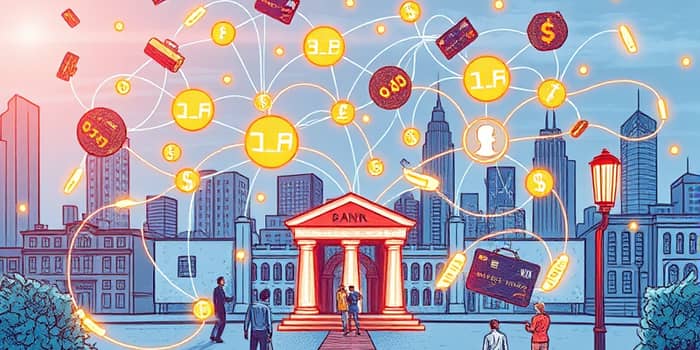
In the heart of our global economy lies a powerful and intricate system that fuels growth, opportunity, and financial well-being for billions.
The credit ecosystem is not just a technical framework; it is a living, breathing network that interconnects financial elements seamlessly to empower dreams and build futures.
By understanding its components and functions, individuals and businesses can harness its potential for greater stability and prosperity in an ever-changing world.
This article explores the credit ecosystem's inner workings, offering practical insights to inspire and guide you through its complexities.
Imagine a world where access to credit is instant, transactions are secure, and economic inclusion is a reality for all.
That vision is made possible by the collaborative efforts of diverse actors working in harmony within this ecosystem.
From small startups to multinational corporations, everyone benefits from the efficient flow of capital and risk management it enables.
The Backbone of Modern Finance: Key Components
At its core, the credit ecosystem is built on a foundation of interdependent players, each with a critical role in sustaining financial health.
These components work together like gears in a well-oiled machine, driving progress and innovation across sectors.
Here are the main actors that form the essential structure of this dynamic system:
- Financial Institutions: Banks, credit unions, and issuers provide loans and credit cards, underwriting risk and managing accounts to ensure liquidity and trust.
- Payment Networks: Entities such as Visa and Mastercard serve as transaction rails, setting rules and enforcing security protocols globally for safe exchanges.
- Payment Processors and Gateways: Technology providers handle data transmission, fraud checks, and integrations, often requiring significant investment for in-house development.
- Credit Reporting Providers: Bureaus compile borrower data and offer scoring, essential for informed lending decisions and expanding financial access.
- Regulators and Bodies: Ensure stability and compliance, protecting consumers from systemic risks and fostering a fair marketplace.
- Consumers and Businesses: The end-users who initiate transactions through various touchpoints, driving demand and shaping market trends.
- Technology Enablers: Fintech platforms offer Banking-as-a-Service, KYC onboarding, and other solutions that modernize financial interactions.
Each element relies on the others, creating a web of dependencies that amplifies efficiency and resilience.
For instance, when a consumer makes a purchase, the entire ecosystem springs into action, from authorization to settlement.
How the Ecosystem Functions Seamlessly
The credit ecosystem operates through a multi-stage flow that stitches together merchants, processors, networks, and issuers for instant payments.
This interconnectedness empowers efficiency, allowing transactions to occur seamlessly across omnichannel platforms.
Disruptions, such as fraud or regulatory changes, can cascade system-wide, highlighting the need for robust collaboration.
To illustrate the process, consider the typical stages involved in a credit transaction:
This flow ensures that funds move securely and swiftly, supporting daily economic activities.
Innovations like real-time dashboards and API-first tools further enhance this functionality, making the system more adaptive.
Trends and Innovations Shaping the Future
The credit ecosystem is constantly evolving, driven by technological advancements and changing consumer expectations.
Embracing these trends can unlock new opportunities for growth and inclusion in the financial landscape.
Key innovations that are transforming the ecosystem include:
- Alternative Data for Scoring: Incorporating non-traditional data sources to assess creditworthiness, expanding access for underserved populations.
- Virtual Cards and Tokenization: Enhancing security and convenience through digital payment methods integrated with mobile wallets.
- Real-Time Dashboards and Automation: Providing instant insights into transactions, reconciliations, and risk management for better decision-making.
- Loyalty and Cashback Embedding: Integrating rewards programs directly into payment processes to boost customer retention and engagement.
- API-First Development Tools: Enabling faster and more flexible integrations for fintech solutions using REST/JSON protocols.
These trends not only improve efficiency but also foster a more inclusive and user-centric financial environment.
By leveraging such innovations, businesses can reduce costs and enhance customer experiences significantly.
Challenges and How to Overcome Them
Despite its strengths, the credit ecosystem faces several hurdles that can impede progress and access.
Addressing these challenges is crucial for maintaining stability and promoting fair financial practices.
Common obstacles include:
- Certification Delays and High Costs: Building in-house processors can take years and millions of euros, slowing down innovation.
- Fraud and Chargeback Management: Cyber threats and dispute resolutions require robust screening and workflow tools to protect all parties.
- Exclusion Cycles in Lending: Traditional scoring methods may overlook viable borrowers, necessitating more inclusive approaches.
- Regulatory Compliance Burdens: Keeping up with evolving laws and security mandates demands continuous adaptation and resources.
- Interdependence Risks: Failures in one part of the ecosystem, such as network outages, can disrupt entire transaction flows.
To overcome these challenges, stakeholders can invest in collaborative technologies, adopt agile frameworks, and prioritize consumer education.
For example, partnerships between fintechs and traditional banks can bridge gaps and accelerate solutions.
Practical Benefits for You
Understanding and engaging with the credit ecosystem offers tangible advantages for personal and professional growth.
It empowers you to make informed decisions, seize opportunities, and contribute to a thriving economy.
Here are some key benefits that you can leverage:
- Enhanced Financial Inclusion: Access to credit and payment tools can uplift individuals and communities, reducing poverty and inequality.
- Improved Risk Management: Better scoring and monitoring help mitigate losses and foster trust in financial transactions.
- Economic Growth and Resilience: Efficient capital flow supports investments, job creation, and overall prosperity in dynamic markets.
- Innovation and Adaptability: Exposure to new technologies and trends enables faster adaptation to changing financial landscapes.
- Personal Empowerment: Knowledge of how credit works allows for smarter borrowing, saving, and investing strategies.
By tapping into these benefits, you can build a more secure and prosperous future for yourself and others.
The ecosystem's role in driving economic inclusion and stability cannot be overstated, as it mobilizes savings and channels investments effectively.
Tools and Infrastructure for Success
To navigate the credit ecosystem effectively, leveraging the right tools and infrastructure is essential.
These resources simplify complex processes and enhance operational efficiency for all users.
Essential tools that support ecosystem functions include:
- Payment-Linked Loyalty Platforms: Integrate rewards with transactions to boost customer engagement and retention.
- Real-Time Settlement Reporting: Provide instant updates on fund transfers and fees for better financial oversight.
- ERP Integrations and User Permissions: Streamline backend processes and secure access controls for businesses.
- Automated Reconciliation Systems: Use files from networks like Visa to match transactions and reduce manual errors.
- KYC Onboarding Dashboards: Facilitate smooth customer verification and compliance with regulatory requirements.
Investing in these tools can transform how you interact with the ecosystem, making it more accessible and manageable.
For instance, small businesses can use white-label apps to offer customized financial services without heavy upfront costs.
Ultimately, the credit ecosystem is a testament to human ingenuity and collaboration in finance.
By embracing its interconnected nature, we can foster a world where financial barriers are minimized and opportunities are maximized.
Take the first step today by exploring how these elements can support your goals and inspire positive change.
References
- https://boxopay.com/blog/merchant-payment-ecosystem-components/
- https://payally.co.uk/glossary/financial-ecosystem/
- https://stripe.com/resources/more/the-payment-industry-ecosystem-explained
- https://www.environment.fhwa.dot.gov/env_initiatives/eco-logical/Implementing_Ecosystem_Crediting.aspx
- https://www.marqeta.com/uk/demystifying-cards-guide/card-payments-ecosystem
- https://www.decta.com/company/media/what-does-the-ecosystem-mean-in-payments-understanding-key-players-and-trends
- https://cartaworldwide.com/blog/payments-ecosystem/card-issuing-ecosystem-explained/