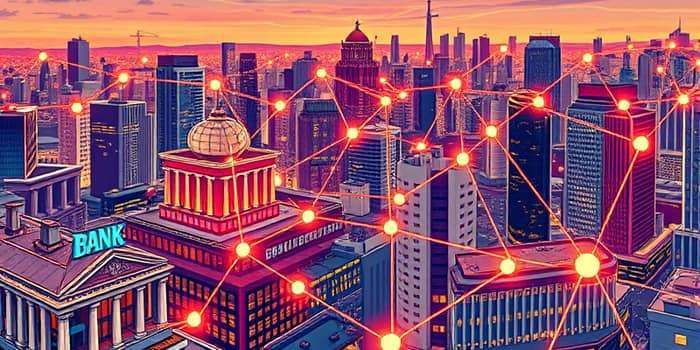
In today’s global economy, credit is the lifeblood that fuels business expansion, consumer spending, and innovation. The interconnected network of financial institutions forms a complex ecosystem where data, funds, and risk converge. By understanding how these elements interact, professionals and consumers alike can better navigate the modern lending landscape.
From banks underwriting loans to fintech startups harnessing alternative data, each participant plays a vital role. This article explores the key players, processes, trends, and challenges that define the credit ecosystem, offering practical insights for those looking to engage with or improve this system.
Understanding the Credit Ecosystem
The credit ecosystem encompasses banks, credit bureaus, fintech companies, regulators, and consumers. Unlike payment systems focused on transaction processing, credit networks emphasize rigorous credit risk assessment and fund intermediation.
At its core, the ecosystem relies on seamless data sharing to evaluate borrower creditworthiness, underwrite loans, and manage repayment. Efficient interconnections ensure funds flow from savers to borrowers while regulators monitor systemic risk.
Main Players in Interconnected Lending
Several components work together to enable lending at scale. Each institution and technology provider adds a layer of service or oversight, creating a resilient yet complex web.
- Issuing Banks: Underwrite loans, authorize credit card transactions, and bear default risk.
- Acquiring Banks: Process merchant settlements, manage fee structures, and ensure timely payouts.
- Credit Bureaus: Collect and analyze borrower data to generate credit scores and reports.
- Payment Networks: Act as rails for authorizations and settlements, defining rules and interchange fees.
- Fintech Providers: Integrate alternative data, offer real-time risk tools, and innovate lending products.
Consumers drive demand, and regulators enforce compliance, consumer protection, and financial stability. Emerging players like digital wallets and Banking-as-a-Service platforms further enrich the ecosystem.
How Credit and Payment Flows Operate
Credit flows often mirror payment authorization and settlement cycles. Understanding each step clarifies how funds move and how data feeds back into risk models.
During the authorization phase, a borrower initiates a transaction or loan request. Data travels through gateways and processors for fraud screening, reaching card networks and issuers for approval. Once approved, merchants fulfill orders or lenders release funds.
The settlement phase reconciles transactions, moves funds, and generates billing statements. Issuers transfer funds to acquirers, who then credit merchants. Meanwhile, transaction data enriches credit monitoring systems, influencing future scoring.
Emerging Trends Shaping the Future
Innovation continues to redefine credit interconnections, driven by technological advances and the quest for inclusivity.
- Alternative Data Integration: Utilities, rental payments, and even social data help score thin-file borrowers.
- Real-Time Credit Products: Instant lending decisions and dynamic credit limits based on live behavior.
- Modular Tech Stacks: API-first issuing, orchestration layers, and plug-and-play risk tools.
Digital wallets and contactless solutions demand faster authorization times, pushing networks to enhance fraud prevention and tokenization technologies. Regulatory frameworks are evolving to address these innovations, balancing growth with consumer protection.
Challenges and Opportunities Ahead
The very interdependence that creates resilience can also introduce systemic risk. A failure at an issuing bank can cascade, impacting merchants and borrowers. Certification requirements and network rule changes add operational complexity.
At the same time, inclusive scoring models promise to bring millions into the formal credit system. Fintech partnerships can bridge gaps for underbanked communities, provided data privacy and security are upheld.
Strategic collaboration among incumbents and disruptors offers a path forward. By sharing best practices, investing in robust infrastructure, and prioritizing consumer trust, the credit ecosystem can continue to evolve.
Ultimately, the future of lending lies in harmonizing innovation with responsibility—ensuring every participant shares in growth and resilience.
References
- https://boxopay.com/blog/merchant-payment-ecosystem-components/
- https://prioritycommerce.com/resource-center/payment-ecosystem/
- https://payally.co.uk/glossary/financial-ecosystem/
- https://stripe.com/resources/more/the-payment-industry-ecosystem-explained
- https://www.environment.fhwa.dot.gov/env_initiatives/eco-logical/Implementing_Ecosystem_Crediting.aspx
- https://www.decta.com/company/media/what-does-the-ecosystem-mean-in-payments-understanding-key-players-and-trends
- https://cartaworldwide.com/blog/payments-ecosystem/card-issuing-ecosystem-explained/