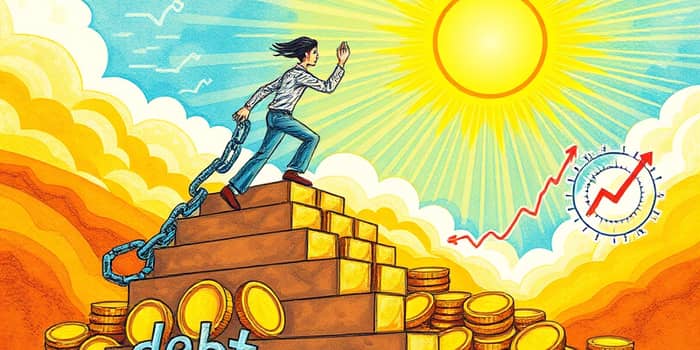
Early loan repayment is more than a financial tactic; it’s a commitment to reduce your financial obligations sooner and claim back control over your monthly budget. Many borrowers underestimate the power of paying off debt ahead of schedule, yet most lenders allow extra payments without penalty. By understanding the terms of your loan and setting a clear plan, you can unlock greater financial freedom and enjoy long-lasting peace of mind.
Introduction to Early Repayment
Paying off a loan early involves applying additional funds toward your principal balance or shortening your payment term. Motivations vary from substantial long-term interest savings to the desire for an unencumbered financial life. Before you begin, review your loan agreement for potential prepayment penalties. Even if a small fee applies, the overall interest saved often outweighs any extra cost.
Benefits (Pros) of Early Loan Repayment
Eliminating debt faster yields both tangible and psychological rewards. The following advantages highlight why accelerating your repayment can be transformative.
- Significant long-term interest savings: Paying principal down early slashes total interest. For example, a $20,000 balance at 10% interest can save roughly $6,000 if paid off immediately.
- Freed-up monthly cash flow: Removing a recurring payment frees money for emergencies, investments, or daily expenses.
- Improved debt-to-income ratio outlook: Lower monthly obligations boost eligibility for mortgages, auto loans, and other credit.
- Boosted credit score quickly: Reducing overall debt levels can improve credit utilization and payment history.
- Reduced stress and mental burden: Crossing a loan off your list enhances confidence and decreases financial anxiety.
Drawbacks (Cons) of Early Repayment
While the benefits are compelling, a balanced approach considers potential downsides. Paying off debt too quickly can affect your credit profile, especially if it shortens the average age of accounts or alters your credit mix. Some loans carry prepayment penalties that reduce gains, though such fees are rare in most markets.
There’s also an opportunity cost. In low-rate environments, you might earn more by investing extra funds than by cutting interest at a minimal APR. For federal student loans, weigh early payoff against income-driven forgiveness plans. In certain cases, preserving cash flow for retirement or emergencies is more advantageous.
Smart Strategies for Early Repayment
Adopting a structured plan increases your chances of success. The tactics below combine discipline with tactical adjustments to accelerate your payoff schedule.
- Make extra or biweekly payments: Splitting your monthly payment in half and paying every two weeks results in 13 payments per year, reducing interest over time.
- Lump-sum windfall contributions: Direct tax refunds, bonuses, or inheritances toward your principal to chop months off your term.
- Use the debt avalanche method: Target the highest-interest loan first, then roll that payment into the next debt to maximize interest reduction efficiently.
- Refinance to a lower rate or shorter term: Securing improved terms can free up additional funds for principal.
- Prioritize high-interest loans first: Tackling debts with double-digit rates yields the greatest savings.
- Automate extra payments: Schedule recurring transfers so you never miss an opportunity to apply payments directly to principal.
- Leverage online calculators: Estimate your savings, visualize timelines, and stay motivated.
Real-World Examples and Calculations
Consider a $30,000 personal loan at 10% annual interest with three years remaining after an initial $10,000 payment. A lump-sum payoff of the remaining $20,000 at that point saves nearly $6,000 in future interest.
Alternatively, on a $15,000 loan at the same rate and a five-year term, adding $150 extra per month reduces repayment to just over three years and cuts $1,603 in interest.
For student debt averaging $38,375 at 6.53% interest over ten years, total payments reach $52,359. Accelerating payments can easily save thousands and shorten repayment by multiple years, allowing you to redirect that money toward homeownership or retirement.
Loan-Type Specific Considerations
Personal loans often carry fixed rates and no prepayment penalties, making them ideal targets for early payoff. Auto loans, especially those with higher interest, can be cleared to free up cash flow for other goals.
Student loans present a special case. Private educational debt typically allows prepayment without fees, but federal loans may qualify for forgiveness under income-driven plans. Evaluate whether rushing to pay federal debt conflicts with potential long-term forgiveness benefits.
Tips for Success and Next Steps
Turning strategy into reality requires habits and tools that reinforce your commitment. Use the following checklist to guide your journey.
- Create a realistic budget and track every payment.
- Channel windfalls directly into loan balances.
- Automate extra contributions to ensure consistency.
- Review refinancing options annually for better rates.
- Maintain an emergency fund to avoid new debt strains.
Every payment you make ahead of schedule is a step toward long-term financial independence and security. Start small, stay consistent, and celebrate each milestone paydown. By implementing these smart strategies, you’ll not only clear debt faster but also build the habits that support lifelong wealth creation.
References
- https://www.lendingclub.com/resource-center/personal-loan/the-pros-and-cons-of-paying-off-a-personal-loan-early
- https://fortune.com/article/pay-off-personal-loan-early/
- https://www.waukeshabank.com/the-pros-and-cons-of-paying-off-your-loans-early
- https://www.nasfaa.org/news-item/15630/CFPB_Finds_Correlation_Between_Paying_Off_Student_Loans_Early_Purchasing_Homes
- https://www.businessinsider.com/personal-finance/personal-loans/how-to-pay-off-loans-quickly
- https://www.consumerfinance.gov/data-research/research-reports/analysis-of-first-seven-months-of-federal-student-loan-return-to-repayment/
- https://www.sccu.com/articles/personal-finance/does-paying-off-loans-early-hurt-your-credit
- https://bidenwhitehouse.archives.gov/cea/written-materials/2024/02/21/issue-brief-the-benefits-of-save/
- https://www.metrofcu.org/resources/blog/metro-blog/2025/06/23/early-auto-loan-payoff-pros-cons-and-strategies
- https://cccsonline.org/5-benefits-of-paying-off-student-loans-early/
- https://www.experian.com/blogs/ask-experian/will-paying-off-a-loan-improve-credit/
- https://www.bestcolleges.com/news/should-you-pay-off-student-loans-early/
- https://www.americanheritagecu.org/about-us/american-heritage-and-the-community/blog/moneyblog/2020/02/20/the-pros-and-cons-of-paying-off-a-0-interest-loan-early
- https://educationdata.org/student-loan-debt-statistics
- https://polamfcu.com/blog/paying-off-your-loans-early-a-few-tips-to-get-ahead/
- https://www.cbo.gov/publication/60711
- https://blog.massmutual.com/planning/student-loan-early-repay