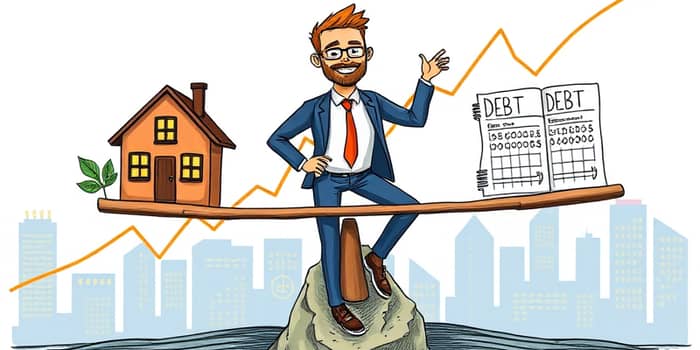
Debt often carries a negative connotation, but when used strategically, it can become a powerful tool for building lasting wealth. In this article, we’ll explore how to distinguish good debt from bad, harness the power of leverage, and implement practical strategies for sustainable financial growth. By adopting the right mindset and best practices, you can convert borrowing into a driver of opportunity, rather than a burden.
Good Debt vs. Bad Debt
Understanding the difference between good and bad debt is foundational to smart money management. Good debt generates long-term value by financing appreciating assets, offering tax advantages, and building credit. Examples include mortgages for rental properties, student loans for career advancement, and loans for business expansion.
In contrast, bad debt involves high-interest payments on depreciating assets or consumables—such as credit card balances for non-income-producing purchases or payday loans. The key principle is simple: borrow only if the investment return exceeds the loan’s interest cost. Anything else can erode your financial health over time.
The Power of Leverage
Leverage occurs when you use borrowed funds to amplify the returns on your personal equity. Imagine putting a $200,000 down payment on a $1,000,000 rental property. By financing the remaining $800,000 with a mortgage, you gain exposure to the full value of the asset.
If the property appreciates by 20% to $1,200,000, your equity grows from $200,000 to $400,000—a 100% return on your initial investment, not merely 20%. This compounding effect is why amplifies returns on equity resonates among savvy investors. However, leverage magnifies losses too, so risk management is imperative.
Most lenders also evaluate your debt-to-income ratio, recommending that monthly debt payments remain at or below 36% of your gross income. This guideline strikes a balance between maximizing leverage and preserving financial stability.
Effective Debt Strategies
- Low-interest loans for investments: Seek loans with rates below projected returns on stocks, bonds, or mutual funds. Compare offers on reputable financial platforms and avoid high-interest credit cards.
- Lines of credit for liquidity: Maintain revolving credit to bridge cash flow gaps or seasonal income fluctuations without liquidating long-term assets prematurely.
- Asset-backed borrowing: Leverage securities-based lending against diversified portfolios (avoiding concentrated or restricted holdings) to finance major purchases, like renovations or vehicles.
- High-net-worth tactics: Pool collateral—real estate, investment portfolios, life insurance cash value—to access flexible facilities such as LIBOR-based loans, swaps, and trusts.
Each strategy requires due diligence, careful planning, and an exit strategy. Always match loan terms to your investment horizon and risk tolerance.
Key Investment Applications
Managing Risk and Best Practices
- Balance risk/reward: Diversify assets, calculate expected returns against interest obligations, and avoid overleveraging your portfolio.
- Monitoring and adjustment: Conduct annual reviews to account for interest rate changes or payment challenges. Treat your debt portfolio like a garden needing care.
- Maintain a healthy credit profile: Timely payments, low credit utilization, and regular credit report checks secure better loan terms.
- Defer capital gains taxes: Borrow rather than sell high-growth assets to leverage tax benefits and maintain liquidity.
Mindset and Expert Insights
Adopting the right perspective is as critical as selecting the right loan. As Chris Rock famously said, “Wealth is not about having a lot of money; it’s about having a lot of options.” Grant Cardone echoes this: “Debt that actually generates income is good debt; assume all other debt is bad.”
High-net-worth individuals often view debt as a tool to unlock additional opportunities rather than a liability to avoid. RBC strategist Robert Doyle emphasizes liquidity management and estate planning through strategic borrowing, highlighting how leveraged flexibility drives growth without forsaking long-term objectives.
Frequently Asked Questions
How can debt generate wealth?
The process of “gearing” involves borrowing funds to acquire assets that appreciate at a rate higher than the loan’s interest. Over time, the gap between asset growth and borrowing costs translates into net profit.
Should I pay off debt or invest first?
Prioritize eliminating high-interest debt, as it erodes returns more rapidly than most investments can compensate. Once high-cost obligations are cleared, pivot surplus cash toward high-return opportunities.
Why borrow if you can pay cash?
Using loans preserves your capital in growth assets, defers taxes, and maintains liquidity for unforeseen opportunities or emergencies.
Conclusion
Debt is neither inherently good nor bad—it’s a financial instrument whose impact depends on how you wield it. By differentiating between value-generating obligations and costly liabilities, employing carefully structured strategies, and maintaining a vigilant risk management regime, you can transform borrowing into a potent wealth-building lever.
Remember to review your portfolio regularly, keep your debt-to-income ratio in check, and seek professional guidance when structuring complex facilities. With discipline and foresight, you can unlock new pathways to financial freedom—turning debt from a source of stress into a cornerstone of long-term prosperity.
References
- https://www.the-ifw.com/blog/investment-strategies/use-debt-to-build-wealth/
- https://myfw.com/articles/strategic-borrowing-how-affluent-individuals-can-use-credit-to-build-wealth/
- https://www.rbcwealthmanagement.com/en-ca/insights/the-role-of-credit-in-wealth-creation
- https://www.schwab.com/learn/story/leveraging-your-assets-to-manage-your-wealth
- https://www.become.nz/articles/you-need-more-debt
- https://www.jpmorgan.com/insights/investing/investment-strategy/paying-with-debt-how-to-leverage-your-investments
- https://www.usbank.com/wealth-management/financial-perspectives/financial-planning/financial-leverage-what-is-good-debt-vs-bad-debt.html