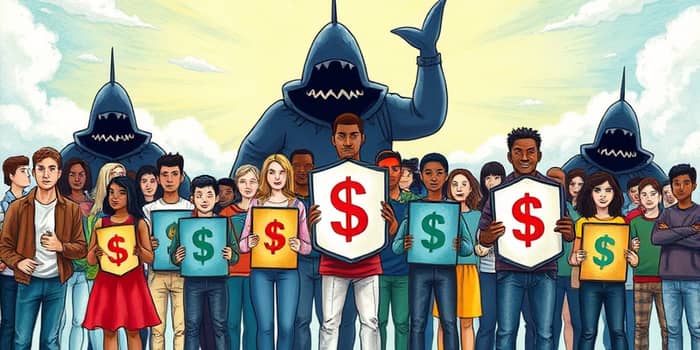
In a world where financial stress is rampant, desperate borrowers often seek quick fixes and may stumble into the clutches of loan sharks.
These predators exploit vulnerability with illegal practices that can devastate lives and finances.
Understanding their tactics is the first step toward empowerment and safety in your monetary journey.
This article delves into the dark world of loan sharks, offering insights and practical strategies to protect yourself.
We will explore their history, operations, legal frameworks, and viable alternatives.
By shedding light on this issue, we aim to inspire vigilance and promote financial resilience for all.
The Silent Predators: Understanding Loan Sharks
Loan sharks are illegitimate lenders who operate outside the law, targeting those in dire need.
They offer cash without background checks or paperwork, creating an illusion of easy access.
However, their interest rates often exceed legal limits, sometimes soaring above 400% APR.
Enforcement of repayment frequently involves threats or actual violence, making them a dangerous choice.
Key characteristics include a lack of licensing and connections to criminal organizations.
Recognizing these signs can help you steer clear of their traps and seek safer options.
- No credit checks or formal documentation.
- Interest rates that are illegally high.
- Use of intimidation tactics for collection.
- Targeting of vulnerable, underbanked individuals.
- Cash-based deals with unclear terms.
By staying informed, you can avoid falling victim to their schemes.
A Dark History: From Salary Buying to Modern Threats
The roots of loan sharking trace back to the 19th century with practices like salary buying.
During the Civil War era, returns could reach up to 500-1000% on investments, preying on soldiers and civilians alike.
This historical context shows how exploitation has evolved with time, adapting to new economic pressures.
Today, loan sharks thrive in cost-of-living crises, where people feel they have no alternatives.
Understanding this evolution highlights the persistent need for legal protections and community awareness.
It reminds us that financial predators have long existed, but so have efforts to combat them.
How Loan Sharks Operate: Signs to Watch For
Loan sharks often approach potential victims through informal networks or in person.
They capitalize on desperation, offering quick funds with minimal questions asked.
Repayment terms are vague, and threats to families or valuables are common tactics.
Watch for lenders who avoid discussing legalities or provide no written agreements.
- High-pressure sales pitches that promise instant relief.
- Demands for personal items as collateral.
- Involvement in criminal activities as part of repayment.
- Refusal to disclose interest rates clearly.
- Suggestions of violence if payments are missed.
Being alert to these red flags can save you from a downward spiral of debt and fear.
The Legal Battlefield: Laws and Protections
Loan sharking is illegal under both state and federal laws in the United States.
Usury laws cap interest rates, varying by state, with penalties for violations.
Federal statutes, such as 18 U.S.C. §§ 891-896, prohibit extortionate credit extensions.
These laws aim to protect consumers from exploitative and violent practices.
Additionally, proposals like the Loan Shark Prevention Act seek to impose national caps.
This act would limit rates to 15% for consumer loans, matching credit union standards.
- State usury caps that limit maximum interest rates.
- Federal laws against extortionate means of collection.
- Invalidation of illegal contracts in court.
- Penalties including imprisonment for offenders.
- Efforts to strengthen statutory damages under acts like TILA.
Understanding these protections empowers you to report violations and seek justice.
Victims and Impacts: Stories Behind the Statistics
Vulnerable groups, such as low-income individuals, are often targeted by loan sharks.
In the UK, over 1 million borrowers have used them, with many living on benefits.
In the US, the payday loan industry generates $9 billion annually from millions of users.
Borrowers face debt spirals and mental health issues as a result of high rates.
For example, a $1,350 loan can balloon to $1,900 in weeks due to exorbitant interest.
This leads to poverty, homelessness, and family hardship, highlighting the urgent need for intervention.
- Increased risk of homelessness and financial instability.
- Mental health challenges like anxiety and depression.
- Strain on family relationships and support systems.
- Long-term economic setbacks from unmanageable debt.
- Exploitation of those with pre-existing health conditions.
By sharing these impacts, we hope to foster empathy and drive action for reform.
Loan Sharks vs. Predatory Lenders: Knowing the Difference
It's crucial to distinguish between loan sharks and other predatory lenders.
While both can be harmful, loan sharks are a violent subset of illegal lending.
This comparison helps you identify which practices are outright illegal and which are merely unethical.
It underscores the importance of seeking fully legitimate financial options whenever possible.
Empowering Yourself: Alternatives and Strategies
There are many safe alternatives to loan sharks that can provide financial relief.
Consider options like personal loans from banks or credit unions, which offer regulated rates.
Credit unions, for instance, cap interest at 15% under current law, providing a secure and affordable choice.
Other strategies include borrowing from family or friends or seeking hardship loans.
- Personal loans with fixed, legal interest rates.
- Credit cards from reputable institutions.
- Financial assistance from community organizations.
- Debt counseling services for tailored advice.
- Government programs for low-income support.
By exploring these avenues, you can avoid the risks associated with illegal lending.
Planning ahead and building an emergency fund also reduces the need for desperate measures.
The Case for Change: Legislative Efforts
Ongoing legislative efforts aim to strengthen protections against loan sharks.
Proposals like the Loan Shark Prevention Act advocate for national interest rate caps.
This would help undercut illegal lenders by providing affordable, legal alternatives.
Enforcement mechanisms, such as centralized officials and wage assignment limits, are also key.
Strengthening laws like the Truth in Lending Act can ensure better consumer disclosures.
Supporting these reforms can create a safer financial landscape for everyone.
- National usury caps to limit excessive interest.
- Enhanced penalties for illegal lending practices.
- Improved financial education initiatives.
- Better access to legitimate small loans.
- Community outreach to raise awareness.
By advocating for change, you contribute to a system that prioritizes consumer safety over profit.
Conclusion: Taking Action for Financial Safety
Navigating loan sharks requires vigilance, knowledge, and proactive steps.
If you suspect involvement with a loan shark, contact law enforcement immediately.
Debts may not be enforceable, and lenders face serious criminal charges.
Seek debt advice from certified professionals to manage any existing obligations.
Remember, financial safety is achievable through informed choices and community support.
By spreading awareness and supporting legal reforms, we can protect ourselves and others.
Take charge of your finances today, and never let desperation lead you into danger.
References
- https://www.sofi.com/learn/content/loan-shark/
- https://www.resolvepoverty.org/loan-sharks/
- https://scholarship.law.duke.edu/cgi/viewcontent.cgi?article=2060&context=lcp
- https://politicalreview.byu.edu/december-2018/loan-sharks
- https://www.justice.gov/archives/jm/criminal-resource-manual-2086
- https://www.brookings.edu/books/loan-sharks-the-birth-of-predatory-lending/
- https://ilr.law.uiowa.edu/print/volume-105-issue-2/biting-the-loan-sharks-why-the-truth-in-lending-act-currently-fails-in-its-goal-to-promote-well-informed-consumer-credit-decisions-and-how-greater-allowance-of-statutory-damages-may-improve-its-effectiven
- https://www.credit-connect.co.uk/news/consumer-lending/credit-reference/1-9m-have-turned-to-loan-sharks-in-the-past-12-months/
- https://www.congress.gov/bill/116th-congress/senate-bill/1389/text
- https://www.stepchange.org/debt-info/owing-money-to-loan-sharks.aspx
- https://www.ojp.gov/ncjrs/virtual-library/abstracts/controlling-contemporary-loanshark-law-illicit-lending-and-problem