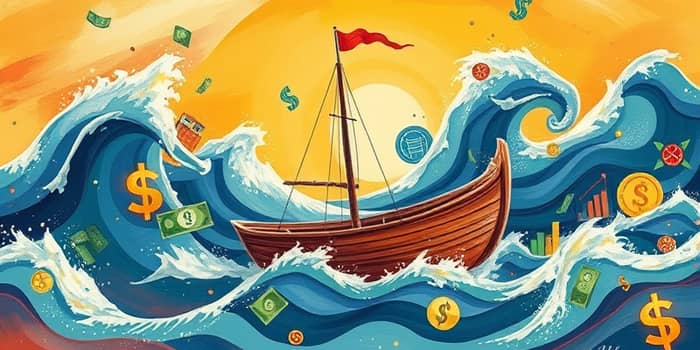
The current economic landscape can feel like a tempest, with shifting winds and unpredictable tides challenging even the savviest individuals. Yet, within these fluctuations lies an opportunity: to anchor your finances and chart a course toward stability and growth. By understanding the forces at play and adopting practical strategies, you can transform uncertainty into a foundation for future prosperity.
As consumers, we face a complex environment driven by multiple factors—rising costs, evolving technologies, and global events that ripple through our wallets. This article offers a comprehensive guide to building a resilient mindset and adaptable actions that will help you navigate these economic waves with confidence.
Understanding the Current Economic Storm
In early 2025, the U.S. economy encountered an "air pocket," characterized by a modest 0.2% dip in consumer spending and persistent inflation and uncertainty. Consumer confidence hit a four-year low, while new tariffs threaten to keep price pressures elevated throughout the year. Despite these headwinds, households remain cautiously optimistic, anticipating a 5% increase in spending over the next 12 months.
These contradictory signals underscore the importance of viewing the economic picture holistically. Consumer behavior, interest rates, global influences, and policy shifts all intertwine to shape your financial reality.
Mastering Debt and Spending Strategies
Debt continues to loom large for many households. With the average U.S. family carrying $149,358 in total debt, including almost $10,000 in credit card balances, reducing liabilities has never been more critical. A troubling K-shaped divide has emerged: 10.8% of cardholders make only minimum payments, while 34% pay off their balances in full.
Buy Now, Pay Later (BNPL) services offer tempting flexibility but can trap consumers in a cycle of high unsecured debt. BNPL borrowers average over $22,000 in monthly unsecured credit, and BNPL purchases constitute around 17% of that debt in borrowing months.
To regain control:
- Prioritize high-interest obligations first, freeing up cash flow for other goals.
- Negotiate lower rates with creditors or consider balance transfers when feasible.
- Limit impulsive purchases by implementing a 24-hour rule before major spending.
By tackling debt strategically, you can create breathing room for savings and investments.
Navigating Consumer Behavior and Spending Trends
Inflationary pressures have shifted priorities. Many Americans now focus spending on essentials, defer big-ticket items, and accelerate emergency savings. According to a recent Pew survey, 57% of adults rate their finances as only fair or poor, and nearly half expect their situation to worsen.
To thrive amid this caution:
- Establish a zero-based budget to assign every dollar a purpose.
- Automate savings contributions to align with paydays.
- Explore side incomes—freelancing, gig work, or monetizing hobbies—to build additional buffers.
These tactics help you maintain control and reduce stress when income or expenses shift suddenly.
Harnessing Technology and Policy Shifts
The evolution of payment technology offers tools to streamline finances. Digital wallets, AI-driven budgeting apps, and secure blockchain transactions are making money management both convenient and personalized.
On the policy front, Federal Reserve decisions continue to reverberate through lending rates and savings yields. As of September 2025, the average savings return reached 0.48%, outpacing inflation at 3% and offering rare real returns for cautious savers.
A simple table can clarify the immediate impacts of Fed rate moves:
Understanding these dynamics allows you to time major financial decisions—locking in mortgages or refinancing when conditions favor you.
Global Perspectives and Long-Term Planning
Economic waves rarely stay within national borders. Currency fluctuations, commodity price shifts, and geopolitical tensions can alter the cost of imported goods, travel, and investment returns. Global slowdowns or crises often trigger stock market volatility, affecting retirement portfolios and college funds alike.
An income shock—job loss or pay cut—poses the biggest threat to financial well-being. Research shows that such shocks lead to substantial declines in subjective financial health. Building a robust emergency fund, ideally covering six months of essential expenses, is your first line of defense.
Long-term, focus on long-term vision for financial independence through steps like:
- Investing in diversified assets—equities, bonds, and real estate—to spread risk globally.
- Acquiring skills aligned with shifting job markets, insulating income from sector downturns.
- Regularly reviewing and rebalancing your portfolio to maintain alignment with goals.
By cultivating versatile human capital and prudent investment habits, you can ride out global storms and leverage opportunities that emerge.
Charting Your Course: Practical Takeaways
To anchor your finances against unpredictable tides, embrace these foundational pillars:
Balanced debt reduction and savings strategy: Commit to a plan that simultaneously lowers high-interest debt and builds your safety net.
Income growth through proactive opportunities: Seek career advancements, skill upgrades, or side ventures that boost earning potential.
Retirement planning with realistic projections: Factor in inflation, market volatility, and policy shifts when modeling your future needs.
Emergency preparedness for sudden shocks: Maintain accessible cash reserves to handle income disruptions without derailing long-term plans.
Through disciplined action and ongoing learning, you transform fear into empowerment. Each decision—whether trimming a recurring subscription, refinancing a loan, or diversifying investments—adds a brick to your financial fortress.
Conclusion: Embrace the Anchor Within
In the swirling currents of today’s economy, you hold the power to set the anchor. By staying informed on macro trends, leveraging modern tools, and grounding yourself in a clear strategy, you cultivate personal financial well-being determinants that withstand external shocks.
Your journey requires both courage and patience. Celebrate small victories—each dollar saved, each debt reduced, each skill acquired—knowing they accumulate into lasting stability. Keep your focus on the horizon, uphold your commitment to growth, and let your personal finance anchor secure you against the storms ahead.
With a resilient plan and steadfast resolve, you’re not merely surviving the economic waves—you’re mastering them.
References
- https://www.globalbankingandfinance.com/personal-finance-in-2025-adapting-to-uncertainty-innovation/
- https://www.stockgro.club/blogs/personal-finance/how-global-economic-events-affect-personal-finances/
- https://www.equifax.com/business/blog/-/insight/article/economic-update-insights-for-2025/
- https://www.bankrate.com/banking/federal-reserve/how-federal-reserve-impacts-your-money/
- https://getreadyforthefuture.com/2025-economic-outlook/
- https://www.mchenrybank.com/articles/2022/09/fed-interest-rate-changes-how-does-this-impact-your-personal-finances.html
- https://www.pewresearch.org/short-reads/2025/05/07/growing-share-of-us-adults-say-their-personal-finances-will-be-worse-a-year-from-now/
- https://www.nefe.org/news/2025/04/financial-well-being-in-america-trend-analysis.aspx
- https://www.vectrabank.com/personal/community/two-cents-blog/The-Impact-of-Economic-Policies-on-Personal-Finance/
- https://www.deloitte.com/us/en/insights/topics/economy/us-economic-forecast/united-states-outlook-analysis.html
- https://www.onpointcu.com/blog/the-impact-of-global-economic-trends-on-personal-investments/
- https://www.boldin.com/retirement/9-big-economic-developments-and-how-theyll-help-or-hurt-your-finances-in-2025/
- https://pmc.ncbi.nlm.nih.gov/articles/PMC8528660/
- https://www.stlouisfed.org/on-the-economy/2025/may/making-sense-recession-probabilities
- https://www.moneypickle.com/blog/the-intersection-of-the-economy-and-financial-planning
- https://www.nber.org/digest/jan16/household-debt-and-business-cycles-worldwide