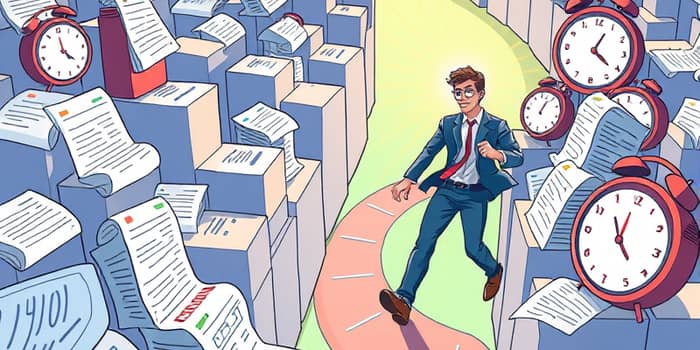
In today's fast-paced business world, the specter of late payments looms larger than ever, threatening the very fabric of enterprises globally. This isn't just about cash flow; it's a silent crisis eroding stability and demanding immediate action.
With over 1.5 million businesses in the UK alone affected annually, the urgency cannot be overstated. The shift from occasional delays to systemic delinquency has transformed how companies operate and survive.
Understanding this landscape is the first step toward resilience. By adopting proactive strategies, you can turn challenges into opportunities for growth and security.
The Alarming Scale of Late Payments
Late payments are no longer a minor inconvenience; they have become a pervasive issue with staggering global consequences.
In the UK, this problem costs the economy nearly £11 billion each year, highlighting its severe impact.
Over 14,000 firms close annually due to late payments, which translates to roughly 38 businesses shutting down every single day.
This trend is mirrored worldwide, with 55% of all B2B invoiced sales in the U.S. being overdue. Such statistics reveal a deep-rooted financial vulnerability that demands attention.
- The UK sees £26 billion owed in late payments at any given time.
- In the U.S., 86% of businesses report up to 30% of monthly sales as overdue.
- Globally, growth corporates lose an average of $18 million annually to delayed funds.
These numbers underscore the critical need for intervention. Without action, the ripple effects can devastate supply chains and economies.
Financial and Operational Fallout
The direct costs of delinquency are immense, with companies facing an average annual expense of $39,406 from late payments.
For many small businesses, this means struggling to cover basic operating expenses, putting their survival at risk.
Over 25% of small firms feel uncomfortable with their cash flow, a direct result of unpaid invoices. This cash flow instability cripples growth and innovation.
- 10% of companies suffer over $100,000 in late payment-related costs.
- 56% of firms cite paying operating expenses as a major challenge.
- U.S. small businesses are owed more than $17,000 each on average from outstanding invoices.
Beyond finances, operational disruptions become commonplace, hindering day-to-day activities and long-term planning.
Root Causes and Warning Signs
Delving into why payments lag reveals complex behavioral and strategic factors. Many buyers are strategically delaying payments to preserve liquidity, shifting risk onto suppliers.
This domino effect cascades through supply chains, exacerbated by tariff uncertainties and cost structure doubts.
Key risk indicators include erratic payment behavior, such as sharp spikes in days beyond terms, which often signals deeper financial distress.
- 92% of businesses admit to paying suppliers late, according to financial decision-makers.
- Only 38% analyze customer payment histories before signing deals.
- Erratic payment patterns are a stronger predictor of trouble than consistently late payments.
Recognizing these signs early can provide a crucial buffer against potential losses.
Proactive Mitigation Strategies
To combat delinquency, businesses must adopt a multifaceted approach centered on vigilance and technology. Start by analyzing customer trade payment histories before finalizing agreements.
Monitoring existing clients for deteriorating behavior is equally vital, as it offers advance warning of issues.
Implementing these steps can help build resilient accounts receivable processes that safeguard your finances.
- Prepare and send invoices quickly and accurately to minimize delays.
- Use technology to ensure invoices contain all necessary information for easy processing.
- Adjust payment terms mid-contract if a customer's financial health changes.
- Educate sales teams to incorporate payment data into deal approvals.
Standardizing communication protocols for collections and preparing contingency plans further strengthen your defense.
Regulatory Support and Future Outlook
The regulatory landscape is evolving to offer stronger protections, especially in the UK where new rules aim to be the toughest in the G7. By 2026, a maximum payment term of 60 days will be enforced, with plans to reduce it to 45 days.
Large companies must report payment performance in annual reports, with audit committees held legally accountable. This enhanced transparency drives accountability and fairness.
- Powers for the Small Business Commissioner to impose fines and conduct spot checks.
- Risk of disqualification from public tenders for poor payers.
- Reporting extended to 2031 with new metrics on late payments and disputes.
These measures empower businesses to navigate delinquency with greater confidence and support.
Building a Competitive Edge
Beyond compliance, ethical payment practices can become a strategic advantage. Small suppliers who pay their own suppliers within 30 days gain a competitive edge in public contracts.
Reputation is increasingly tied to payment behavior, with investors and employees judging companies on this metric. Embracing this shift can foster long-term trust and loyalty.
- 15% of businesses already avoid clients with bad payment records, a figure expected to rise.
- Payment terms will feature in annual reports and investor calls at board levels.
- Late payments are becoming a stewardship and ESG issue, not just operational.
By prioritizing punctuality, you position your business as a reliable partner in a volatile market.
This table highlights the pervasive nature of late payments and the urgent need for action across regions.
Conclusion: A Path Forward
Navigating delinquency requires a blend of awareness, strategy, and resilience. By leveraging data and regulatory changes, businesses can turn adversity into opportunity.
Remember, proactive measures not only protect your bottom line but also enhance your reputation in a competitive landscape. The journey to financial stability begins with taking control of payment cycles.
Embrace these steps, and you'll find yourself not just surviving, but thriving amidst challenges. Let this be your guide to a more secure and prosperous future.
References
- https://www.enterprisenation.com/learn-something/late-payment-in-2026/
- https://www.kaplancollectionagency.com/business-advice/54-statistics-on-the-b2b-payment-delays/
- https://www.supplychainbrain.com/blogs/1-think-tank/post/41815-dollars-delayed-suppliers-dismayed-the-true-cost-of-late-payments
- https://www.bottomline.com/resources/92-percent-businesses-pay-suppliers-late-payment-insights
- https://www.juniperresearch.com/resources/blog/11-payment-stats-you-need-to-know-for-2026/
- https://www.emarketer.com/content/payments-trends-watch-2026
- https://argozconsultants.com/payment-trends-from-2025-reality-to-2026-horizons/
- https://www.paymentsjournal.com/the-3-key-trends-that-will-shape-merchant-payments-in-2026/
- https://workingcapitalindex.visa.com