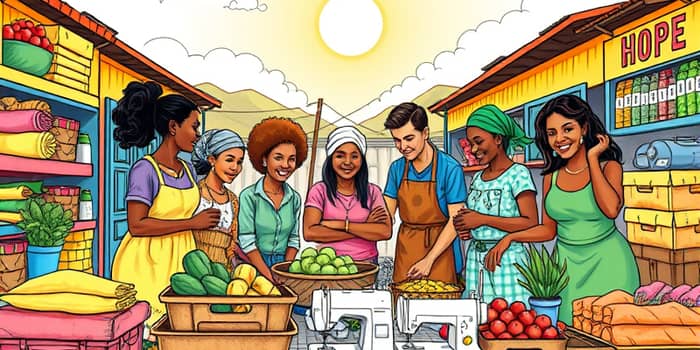
Microloans have emerged as a powerful financial tool that bridges the gap between ambition and opportunity. By offering small-dollar, short-term financing solutions, they unlock the potential of entrepreneurs and communities often overlooked by traditional lenders.
Understanding Microloans: A Growing Financial Movement
At their core, microloans are modest loans ranging from $100 to $50,000, designed to fuel working capital, inventory purchases, equipment acquisition, and daily operations. Unlike conventional bank loans that demand extensive credit histories or significant collateral, microloans rely on more flexible underwriting criteria.
Often provided by nonprofit microlenders, microfinance institutions, NGOs, or government-backed schemes, these loans offer faster application and approval times and can be disbursed digitally. They specifically target startups, small businesses, and underserved populations—women, minorities, rural entrepreneurs—who face barriers to accessing mainstream financing.
Who Benefits from Microloans?
Microloans serve a wide spectrum of borrowers. Whether launching a street food cart, expanding a backyard sewing business, or stocking fresh produce in rural markets, these entrepreneurs gain crucial capital and guidance.
- Startups with minimal credit history
- Women-led enterprises seeking empowerment
- Minority-owned small businesses in underserved areas
- Social enterprises and community-based initiatives
- Seasonal ventures needing inventory financing
Advantages That Transform Lives
Microloans bring more than funds; they deliver tailored support and mentoring programs that enhance business acumen, financial literacy, and long-term planning. Borrowers often receive coaching in bookkeeping, marketing, and regulatory compliance, setting them up for sustained success.
The competitive interest rates—typically in the high single digits to low double digits—are often subsidized or even zero percent through nonprofit channels. Such terms build credit history and pave the way for future borrowing opportunities.
- Accessibility: Low credit score requirements and no collateral
- Flexibility: holistic evaluation of business plans rather than strict financial metrics
- Speed: Digital processes ensure quick funding for urgent needs
- Support: Mentorship, training, and networking opportunities
Comparing Loans: Microloans vs. Traditional Financing
Potential Drawbacks and Considerations
While microloans offer remarkable benefits, there are trade-offs. The smaller loan amounts may not suffice for large-scale expansions, and interest rates, though fair, can exceed those of prime bank loans. Borrowers must prepare viable business plans and realistic financial forecasts to secure approval.
- Limited funding may restrict major investments
- Harder to locate reputable microlenders in some regions
- Eligibility often requires solid business documentation
- Interest still higher than the best commercial rates
Maximizing Success: Tips for Aspiring Borrowers
To make the most of microloans, entrepreneurs should approach the process strategically. Preparation and due diligence are key to unlocking the full potential of this financing avenue.
- Develop a clear, concise business plan highlighting revenue streams
- Gather financial statements, projections, and relevant documents
- Research microlenders and compare terms and support offerings
- Attend workshops on financial management and marketing
- Maintain timely repayments to build strong credit history
Real-World Impact: Stories of Growth
Consider Maria, a single mother who turned a backyard sewing nook into a thriving custom clothing business. A $5,000 microloan covered her initial fabric and equipment expenses. With mentorship on pricing strategies, her revenue doubled within twelve months.
In rural India, a group of women craftspeople pooled a microloan to purchase a communal loom. Their cooperative now produces handwoven textiles sold locally and online, generating sustainable income and community pride.
These narratives illustrate the critical stepping stone for entrepreneurs that microloans represent—catalyzing growth, fostering innovation, and uplifting entire communities.
Looking Ahead: The Future of Microfinance
As digital platforms expand, microloan accessibility will surge, reaching new demographics through mobile apps and peer-to-peer networks. Innovations like blockchain-based credit scoring and AI-driven underwriting promise even greater inclusivity.
Globally, the microloan portfolio exceeds $102 billion, and its trajectory continues upward. By integrating financial technology with grassroots outreach, lenders can deliver comprehensive empowerment for local communities at scale.
Ultimately, microloans exemplify how modest capital injections, combined with education and mentorship, can yield exponential social and economic returns. For entrepreneurs ready to take the next step, these loans offer a pathway to realize ambitions and transform lives.
References
- https://www.nav.com/blog/69-understanding-the-basics-microloans-vs-traditional-loans-5393/
- https://1finance.co.in/blog/micro-loans-vs-p2p-lending/
- https://fiveable.me/key-terms/ap-hug/microloans
- https://www.business.org/finance/loans/pros-cons-microloans/
- https://nucleuscommercialfinance.com/blog/microloans-a-catalyst-for-small-business-growth/
- https://www.suncoast.com/Blog/Buy-and-Borrow/What-is-the-Difference-Between-a-Microloan-and-a-Commercial-Loan
- https://www.experian.com/blogs/ask-experian/what-is-microlending/
- https://www.universitylabpartners.org/blog/microloans-for-startups-explained
- https://www.indeed.com/career-advice/finding-a-job/what-is-microfinance
- https://techtowndetroit.org/how-to-identify-the-right-microloan-for-your-business/
- https://poverty-action.org/impact/evidence-microcredit-rethinking-financial-tools-poor
- https://www.forafinancial.com/blog/working-capital/microlending-business-owners/
- https://microeconomicinsights.org/understanding-the-average-impact-of-microcredit/
- https://blog.givewell.org/2008/03/11/microloans-vs-payday-loans/
- https://academic.oup.com/oxrep/article/40/1/1/7630840