In an era marked by rapid change and uncertainty, the quest for economic resilience has never been more urgent. This article explores how stakeholders—governments, businesses, and individuals—can cultivate robust growth and stability.
The Global Economic Outlook
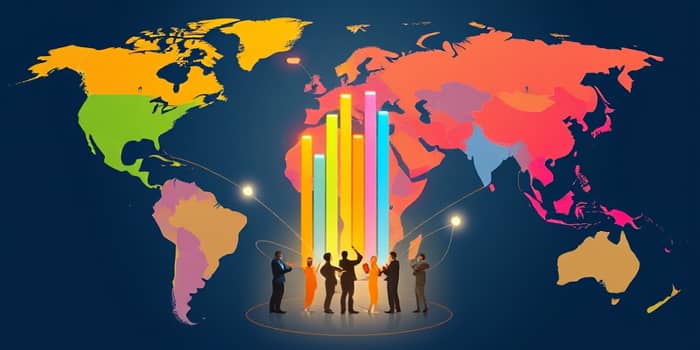
Forecasts for 2026 point to global GDP growth projections around 2.7 to 3.3%, a slight dip from pre-pandemic norms but nonetheless indicative of steady recovery. Major institutions like the IMF, Goldman Sachs, and UNCTAD highlight a world economy that remains resilient amid widespread headwinds. While inflation is expected to ease to about 3.1%, cost-of-living pressures persist in many regions, especially for vulnerable populations.
Regional disparities are stark. The United States is projected to grow at roughly 2.6%, buoyed by tax incentives and reduced tariffs, whereas Europe hovers near 1.3%, hampered by investment constraints. In Asia, robust expansion—around 4.5%—is driven by technology adoption and resilient export demand.
Key Drivers of Resilience
Several factors underpin this sturdy growth trajectory. First, technology and AI investments are reaching record levels, with Big Tech pledging trillions by 2030. These outlays fuel productivity gains across sectors.
- Accommodative financial conditions: Central banks are gradually easing, stabilizing borrowing costs.
- Private sector adaptability: Firms are reshoring supply chains and innovating under pressure.
- Resilient consumer demand and labor markets: Low unemployment rates support spending.
- Strategic fiscal policies: Targeted tax cuts and infrastructure programs bolster growth.
These drivers underscore the critical interplay between public policy and private initiative. When aligned, they can unlock sustainable expansion even amid global uncertainty.
Major Risks and Headwinds
Despite the encouraging outlook, several threats could derail progress. Foremost among them are ongoing trade tensions and tariff escalations that raise costs and fragment supply chains. Geopolitical flashpoints—from U.S.-China rivalry to energy disruptions—add layers of uncertainty.
- Trade disputes and tariff barriers: Disrupt cross-border investment flows.
- Fiscal strains and high debt levels: Many advanced economies face deficits above 7% of GDP.
- Demographic pressures on labor supplies: Aging populations may slow productivity gains.
- Commodity price volatility: Sudden swings in oil and food prices hit low-income households hardest.
Unchecked, these factors could lock in lower long-term growth. Coordinated action is essential to mitigate risks and sustain momentum.
Policy Recommendations and Structural Reforms
Policymakers must act decisively to shore up resilience. Key measures include restoring fiscal buffers, prioritizing price stability, and reducing regulatory uncertainty. A focus on coordinated structural reforms for inclusive growth will pay dividends over the long term.
Practical Strategies for Stakeholders
Building economic strength is not solely the domain of governments. Businesses and individuals can adopt concrete steps to thrive:
- Businesses: Diversify supply chains, invest in workforce upskilling, and embrace digital transformation.
- Investors: Focus on sectors driving innovation—such as green energy and AI—while maintaining portfolio diversification.
- Individuals: Develop adaptable skills, build emergency savings, and engage in lifelong learning.
By taking these actions, each actor contributes to a more robust and adaptable economy.
Conclusion: Charting a Path Forward
The global outlook for 2026 presents both promise and peril. Through strategic collaboration among all stakeholders—governments, businesses, and citizens—we can navigate headwinds and seize opportunities. Restoring fiscal health, fostering innovation, and managing risks will be key to sustaining growth.
As policymakers refine their approaches and private actors mobilize resources, the collective effort can transform uncertainty into a springboard for resilience. Let this moment serve as a rallying cry: by embracing bold reforms and fostering inclusive prosperity, we can build an economy that endures and empowers future generations.
References
- https://www.goldmansachs.com/insights/outlooks/2026-outlooks
- https://unctad.org/publication/world-economic-situation-and-prospects-2026
- https://www.imf.org/en/publications/weo/issues/2026/01/19/world-economic-outlook-update-january-2026
- https://www.spglobal.com/market-intelligence/en/news-insights/research/2026/01/global-economic-outlook-january-2026
- https://www.caixabankresearch.com/en/economics-markets/activity-growth/world-economy-2026-resilience-transition-or-disruption
- https://www.ey.com/en_us/media/webcasts/2026/01/2026-global-economic-outlook-navigating-a-bifurcated-landscape
- https://www.visualcapitalist.com/the-3-biggest-risks-to-the-global-economy-in-2026/
- https://documents.worldbank.org/en/publication/documents-reports/documentdetail/099710001132613726
- https://www.oxfordeconomics.com/key-themes-2026/
- https://policy.desa.un.org/themes/macroeconomic-analysis/world-economic-situation-and-prospects-2026