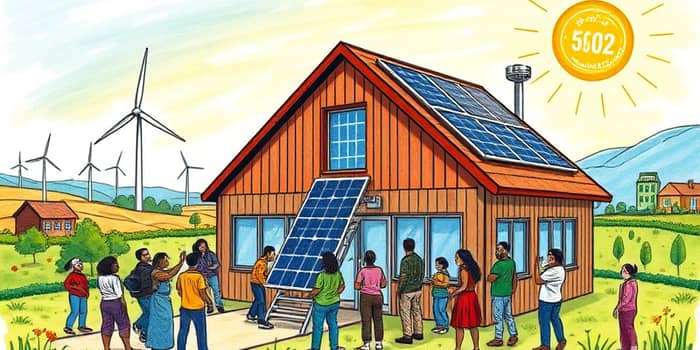
In a world where financial decisions ripple across communities and ecosystems, a new paradigm is emerging: one where borrowing can be a catalyst for positive change.
Sustainable lending transforms debt into a tool for healing the planet and uplifting society.
It represents a profound shift in how we view credit, moving beyond profit to purpose-driven finance.
This approach allows individuals and businesses to fund projects that benefit both their futures and the environment.
Imagine taking out a loan that not only builds your home but also reduces carbon emissions.
That is the promise of sustainable lending, redefining what it means to borrow responsibly.
Understanding Sustainable Lending: More Than Just Money
Sustainable lending refers to loans designed specifically for environmentally and socially responsible projects.
It integrates sustainability assessments into lending rules, recognizing that such projects create long-term value.
This financial model aligns with global efforts to combat climate change and promote equity.
By choosing sustainable loans, borrowers become agents of change in their communities.
It’s a way to ensure that every dollar borrowed contributes to a better world.
Types of Sustainable Lending Products: Empowering Your Choices
A variety of financial instruments cater to different needs, each with unique features.
Understanding these options can help you select the right tool for your goals.
- Sustainability-Linked Loans (SLLs): These are tied to the borrower's overall sustainability performance, offering lower interest rates for hitting green metrics like carbon emissions reduction.
- Green Bonds: Debt instruments used by governments and companies to fund environmentally themed projects, such as renewable energy installations.
- Green Loans: Specifically promote investments in renewable energy, green buildings, and sustainable farming.
- Energy Efficiency Mortgages (EEMs): Enable homeowners to finance upgrades like solar panels, saving on utility costs while reducing their carbon footprint.
- Sustainability-Linked Supply Chain Finance: Suppliers receive preferential rates if they meet sustainability-linked metrics, encouraging greener practices across industries.
Each product is designed to make sustainable investing accessible and rewarding.
Financial Benefits for Borrowers: Why It Pays to Go Green
Choosing sustainable lending isn't just good for the planet; it’s smart economics.
Borrowers often enjoy lower borrowing costs and more favorable terms.
- Lower interest rates due to financial incentives or government subsidies.
- Margin adjustments based on achieving sustainability performance targets.
- Access to capital for projects that might otherwise be difficult to finance.
- Potential for increased property values through energy-efficient upgrades.
- Long-term savings from reduced utility bills and operational costs.
These benefits make sustainable lending an attractive option for forward-thinking individuals and businesses.
Advantages for Lenders: A Strategic Investment
Financial institutions also gain significantly from embracing sustainable lending practices.
It’s not just about altruism; it’s about building a resilient and profitable portfolio.
- Higher loan volumes, with ESG lending potentially forming up to 30% of total portfolios.
- New value generation through innovative financial products.
- Risk mitigation with up to 4.5% higher total returns for shareholders.
- Lower cost of funding by attracting eco-conscious investors.
- Enhanced reputation as leaders in responsible finance.
By supporting sustainable projects, lenders contribute to a stable and thriving economy.
Environmental and Social Impact: Creating a Legacy
The true power of sustainable lending lies in its ability to drive tangible change.
Every loan taken for a green project has ripple effects that extend far beyond the balance sheet.
- Direct contribution to environmental preservation through funding solar energy projects.
- Promotion of responsible resource usage in agriculture and infrastructure.
- Long-term value creation for both borrowers and the environment.
- Climate risk mitigation by financing adaptation measures against shocks.
- Social investment programs that uplift underserved communities.
This impact ensures that borrowing today builds a sustainable tomorrow.
Reputational Benefits: Building Trust and Loyalty
In an era where consumers value ethics, sustainable lending offers a competitive edge.
Businesses can leverage their commitment to sustainability as a powerful marketing tool.
It appeals to eco-aware clientele and builds long-term brand loyalty.
Demonstrating responsibility can differentiate a company in crowded markets.
This reputational boost translates into increased customer trust and retention.
International Standards: Ensuring Integrity and Trust
To prevent greenwashing and maintain credibility, global frameworks guide sustainable lending.
These standards help validate claims and direct capital effectively.
- Sustainability Linked Loan Principles: Promote versatile products with core components like the borrower's ESG strategy and measurable targets.
- Green Finance Frameworks: Set clear criteria for 'green' transactions by major banks.
- International Sustainability Standards Board (ISB): Defines how investors can validate sustainability claims.
- OECD Sustainable Lending Recommendation: Built on respecting debt limits and promoting sustainable practices.
Adhering to these frameworks ensures that sustainable lending remains transparent and impactful.
Key Industry Participants: Leaders in the Movement
Several financial institutions are at the forefront of this revolution, setting examples for others.
These players demonstrate how sustainable lending can be integrated into mainstream finance.
Global Context: Aligning with Broader Goals
Sustainable lending is not just a trend; it’s a critical component of global development efforts.
It helps achieve the United Nations' Sustainable Development Goals (SDGs) by funding relevant projects.
Institutions like the International Bank for Reconstruction and Development connect investors with impactful initiatives.
This alignment ensures that borrowing power contributes to a more equitable and resilient world.
By embracing sustainable lending, we can all play a part in shaping a brighter future.
References
- https://www.dictionary.com/browse/credit
- https://www.greencitytimes.com/sustainable-lending/
- https://www.merriam-webster.com/dictionary/credit
- https://www.mayerbrown.com/-/media/files/perspectives-events/publications/2019/06/sustainable-lending
- https://ratedpower.com/blog/sustainable-finance-examples/
- https://www.oecd.org/en/topics/sustainable-lending-practices.html
- https://www.unepfi.org/themes/ecosystems/5-examples-of-best-practice-to-sustainably-finance-the-port-sector/