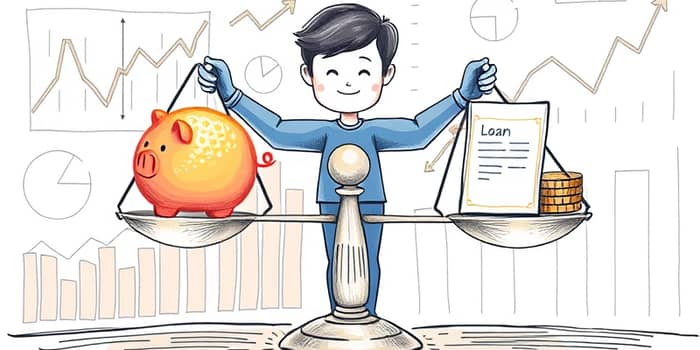
Every financial decision you make weaves the fabric of your future, shaping your security and opportunities.
Saving involves setting aside income for future needs, a practice that builds stability and discipline over time.
In contrast, borrowing provides immediate funds, but it requires careful management to avoid pitfalls.
This choice is more than numbers; it's about aligning actions with your deepest values and goals.
By mastering when to save and when to borrow, you can navigate life's challenges with confidence and grace.
The Essence of Saving and Borrowing
Saving is the art of patience, where you accumulate resources for tomorrow's dreams.
It fosters financial security and acts as a buffer against unexpected emergencies.
Borrowing, on the other hand, is a tool for acceleration, allowing you to seize opportunities now.
Both strategies have their place, but misuse can lead to stress or missed potential.
Understanding their core differences empowers you to make choices that resonate with your life path.
The Benefits of Saving
Saving cultivates a sense of control and peace in your financial journey.
It provides a safety net for emergencies, reducing reliance on high-cost debt.
Building an emergency fund ensures you can handle surprises without derailing your plans.
Over time, savings grow through interest, compounding your wealth silently.
This discipline helps you live within your means and prioritize what truly matters.
- Financial security for unexpected events like medical bills or car repairs.
- Cultivates spending habits that align with long-term goals.
- Enables opportunities such as buying a home or starting a business debt-free.
- Avoids interest and fees, freeing up funds for other priorities.
The Benefits of Borrowing
Borrowing can be a strategic move to invest in your future self.
It allows access to major purchases like homes or education sooner.
Leveraging low interest rates can help you beat inflation and build assets.
When used wisely, borrowing accelerates progress toward significant life milestones.
It protects your purchasing power against rising prices over time.
- Access to investments that appreciate, such as real estate or education.
- Strategic when returns exceed borrowing costs, boosting net worth.
- Preserves long-term savings from being depleted for immediate needs.
- Facilitates time-sensitive opportunities without overextending cash flow.
The Risks Involved
Both saving and borrowing come with inherent risks that require awareness.
For saving, the main risk is opportunity cost and inflation eroding value.
Delaying goals unnecessarily can mean missing out on life experiences.
Low savings returns might not keep pace with economic changes.
For borrowing, high interest rates can trap you in a cycle of debt.
Mismanagement impacts credit scores and strains financial health.
- Risks of saving: Inflation reduces purchasing power; delays can mean higher costs later.
- Risks of borrowing: Interest inflates total expenses; overextension leads to cash flow issues.
Types of Borrowing
Not all debt is created equal; understanding types helps in making informed choices.
Good debt versus bad debt is a key distinction for financial health.
Good debt finances appreciating assets, while bad debt covers depreciating items.
- Personal loans: Fixed rates for consolidations or major purchases.
- Credit cards: High rates best for short-term use, risky for large expenses.
- Mortgages and student loans: Long-term investments with potential value growth.
Key Decision Factors
Choosing between saving and borrowing depends on multiple personal and economic factors.
A thorough analysis of your situation can guide you toward the optimal path.
Interest rates and time horizons play crucial roles in this decision.
Below is a table summarizing key considerations to help you evaluate.
Learning from Numbers
Real-world examples illustrate the impact of saving versus borrowing decisions.
Car purchase scenarios show how inflation affects costs over time.
For a $40,000 car, saving cash avoids interest but may cost more due to price rises.
Borrowing at 4% over five years incurs interest but could be cheaper with inflation.
Vacation or education expenses highlight the importance of rate comparisons.
- Example: $5,000 vacation with a 7% loan vs. 20% credit card vs. savings at 2.25%.
- Example: $25,000 college cost with early saving versus borrowing at 6% over 10 years.
These calculations emphasize that borrowing can be wise if returns outweigh costs.
When to Choose Saving
Saving is ideal for situations where patience leads to greater rewards.
It aligns with building a foundation for long term financial health.
Choose saving when you have the time and discipline to accumulate funds gradually.
- Short-term goals like vacations or home improvements within months.
- High interest environments where borrowing costs are prohibitive.
- Building or maintaining an emergency fund of 3-6 months' expenses.
- Non-urgent needs that fit into your overall financial plan.
- Avoiding debt when another significant purchase is on the horizon.
When to Choose Borrowing
Borrowing becomes a powerful tool when used for strategic investments.
It allows you to seize time sensitive opportunities without delay.
Opt for borrowing when the benefits clearly outweigh the financial costs.
- Insufficient savings for essential repairs or emergencies.
- Low interest rates combined with inflationary pressures.
- Investments with high returns, such as education or business ventures.
- Preserving long-term savings from being liquidated prematurely.
- Capitalizing on opportunities that require immediate action.
A Balanced Approach
The wisest strategy often integrates both saving and borrowing harmoniously.
Pay yourself first by prioritizing savings, then use debt strategically for growth.
Assess your cash flow, credit health, and goals to create a personalized plan.
Remember, good debt can advance your life, while saving provides the stability to thrive.
Embrace a mindset that values both patience and action in your financial journey.
By blending these tools, you can achieve a richer, more secure future.
References
- https://gh.fido.money/post/saving-money-vs-borrowing-making-the-right-choice
- https://www.neofinancial.com/blog/thegetmag-saving-vs-financing
- https://www.firstalliancecu.com/blog/use-savings-or-a-loan
- https://www.ubt.com/learning-center/blogs/big-purchases-spend-your-savings-or-borrow-money
- https://www.capitalgroup.com/individual/planning/college-savings/new-parents/saving-vs-borrowing.html
- https://blog.harvardfcu.org/when-is-borrowing-a-loan-the-better-option
- https://bhgfinancial.com/personal-loans/should-you-dip-into-savings-or-use-a-loan
- https://www.bankrate.com/banking/savings/these-guidelines-will-help-you-decide-whether-to-pay-down-debt-or-save/